

The professional poker ecosystem in 2026 is a mature, tech-heavy environment where the old-school divide between “GTO nerds” and “exploitative grinders” has finally merged into a singular hybrid approach.
For a player choosing between cash games and Multi-Table Tournaments (MTTs), the decision is no longer about vibes; it’s a cold calculation of variance tolerance, schedule flexibility, and mastery of specific game states.
In an era where AI and Mass Data Analysis (MDA) are standard tools, the gap between disciplines has shifted from “which format is easier” to “which format fits my operational model.”
The 2026 Strategic Landscape: GTO-Exploit Convergence
The current meta is defined by the “Three-Step Framework.” Instead of blindly clicking solver buttons, pros now use GTO as a baseline, perform a Gap Analysis to find pool deviations, and then design surgical exploits to maximize $EV$. In 2026, the elite don’t view GTO and exploit as opposites—they are two barrels of the same shotgun.
GTO as the Defensive Anchor
In 2026, Game Theory Optimal (GTO) play serves as your bulletproof vest. By playing a Nash Equilibrium strategy, you ensure that even against a world-class opponent, your worst-case scenario is breaking even. In high-stakes environments where technical edges are razor-thin, GTO is the mandatory floor. The heavy hitters focus on range advantage, positional dynamics, and Stack-to-Pot Ratios ($SPR$). Solvers often suggest counter-intuitive lines—like bluff-catching with “garbage” or range-betting tiny on boards that hit your range but miss your exact hand—to keep frequencies balanced.
Mass Data Analysis (MDA) and the New Exploit
If GTO is the map, MDA is the X that marks the treasure. The 2026 meta has seen an explosion in large-scale database research, where pros analyze 100M+ hand samples to find systematic leaks in the player pool. Research shows that the average “reg” still over-folds to delayed c-bets on the turn, creating massive $+EV$ opportunities that a pure theory player would miss.
| Metric | GTO Approach | Exploitative (MDA) |
| Primary Goal | Minimize maximum exploitation | Maximize $EV$ against mistakes |
| Priority | Balanced ranges/frequencies | Leak identification and punishment |
| Efficacy | Best vs. strong, adaptive regs | Best vs. fish and unbalanced regs |
| Tools | PioSolver 3, GTO Wizard | Hand2Note 4 PRO, MDA Studies |
Cash Games in 2026: Stability as a Business Model
Cash games remain the “salary” format of poker, offering the most predictable income streams and lifestyle flexibility. Since every chip has a fixed dollar value and blinds never go up, players grind in deep-stack (100bb+) environments where post-flop wizardry and pot geometry are everything.
Profitability and the Hourly Rate
For the pro, cash is a volume game. By maintaining a solid $bb/100$ winrate, you can accurately forecast your monthly earnings. While you won’t “bink” a life-changing score in a single night, the absence of the brutal 20-tournament-bricks that plague MTT players makes cash the go-to for those who need to pay bills. Lower variance and the ability to table-select or quit a session at any time allow for higher-quality decision-making.
The Challenges: Rake and GTO Bots
Despite the stability, 2026 cash games are a grind. Rake is the “winner’s tax,” hitting micro and low-stakes players the hardest and requiring high winrates just to beat the house. Furthermore, the prevalence of GTO bots and Real-Time Assistance (RTA) has shrunk the edge in certain pools. Modern cash training now focuses heavily on identifying “bot-like” patterns and using MDA deviations to counter them.
Tournament Poker 2026: The Art of Risk and ICM
MTTs are the “glamour” discipline, offering the chance at life-changing scores for a fixed buy-in. However, the strategic landscape is infinitely more complex than cash due to escalating blinds, antes, and the heavy hand of the Independent Chip Model (ICM).
📝 https://elitepokerguide.io/daniel-negreanu-poker-coach/
The ICM Squeeze and Survival Value
In MTTs, survival has a literal dollar value. Unlike cash, where you take every slightly $+EV$ spot, tournament players must often fold the best of it to protect their “tournament life,” especially near the bubble or on final tables. This is because losing your whole stack means you’re done, while doubling up provides diminishing returns in terms of actual equity value.
Variance and the “20 Deep Run Rule”
MTT variance is a monster. A crusher might have a 20% ITM (In The Money) frequency but still face year-long downswings if they can’t realize their equity during “deep runs.” Data shows that a 2,000-tournament sample often hinges on just 20 critical final tables. If you run bad in those 20 spots, you look like a loser despite playing perfectly. This requires a massive bankroll (100-200+ buy-ins) and a mental game of steel.
| Metric | Cash Games | Tournaments (MTT) |
| Main Goal | Maximize $EV$ of every hand | Maximize share of prize pool (ICM) |
| Stack Depth | Static (usually 100bb+) | Dynamic (10bb to 200bb) |
| Variance | Moderate | Extreme |
| Time Commitment | Flexible (sit/quit anytime) | Rigid (12-hour sessions) |
| Bankroll Need | 30-50 Buy-ins | 100-200+ Buy-ins |
Analysis of Top Cash Game Courses 2026
The 2026 training landscape is dominated by schools that have successfully distilled solver complexity into actionable, data-backed blueprints.
Play It Smart Bootcamp
This 10-episode “surgical” course focuses on high-frequency, high-$EV$ nodes. It’s designed to plug post-flop leaks through aggressive, modern lines.
- Flop and River Check-Raises: Deep dive into taking the lead when out of position ($OOP$) by polarizing your range to maximize both fold equity and value.
- Overbet Strategy: Episode 3 focuses on using 125%+ pot sizes to crush capped ranges—an essential skill for the 2026 elite.
- Triple Barreling: The “Bet Bet Bet” module provides a framework for identifying board textures where maximum aggression on all three streets is the optimal play.
Carrot Corner – Full Scholarship
Led by Peter Clarke, Carrot Corner offers a graded curriculum that moves from core math to high-level textural awareness.
- Grade 0 (The Foundation): Clarifies the difference between Equity and Expected Value, framing poker as a “Tree of Possibilities.”
- Grades 1-3 (Advanced Play): Tackles polarization, nut advantage, and turn barreling. Each grade requires passing an exam to move forward.
- Textural Awareness: Teaches students to adjust c-bet frequencies based on board connectivity—a must for beating the tough mid-stakes regs of 2026.
Run It Once: Dominate With Data
Patrick “FreeNachos” Gerritsen’s course is the ultimate MDA manual. Using a 200M hand database, Gerritsen provides a roadmap for crushing both regs and recs.
- Data Research: Teaches Hand2Note custom pop-up creation and how to establish “pool baselines.”
- Post-flop Exploits: Precise instructions on turn “probes” and stabbing against missed c-bets based on statistical pool tendencies.
- 4-bet Pot Geometry: Advanced research into low-$SPR$ spots where pool errors are the most expensive.
Upswing Poker: The Poker Blueprint
By Uri Peleg, this course focuses on five core principles for making exploitative decisions. It’s widely considered the gold standard for transitioning to a pro mindset.
- Core Principles: Includes modules on building reads, catching frequency mistakes, and surviving the “Circle of Death” downswings.
- Fishing Tricks: Specific tactics to maximize hourly rates against “whales” and recreational players.
- Live Hand Analysis: Breaks down Doug Polk and other pros in real-time to show how the “blueprint” functions against various player types.
Analysis of Top Tournament Courses 2026
MTT training has moved toward an “ICM-First” approach, recognizing that late-game decisions are the primary drivers of ROI.
GTO Lab: Tournament Savagery
A masterclass by Nick Petrangelo and Daniel Dvoress that reframes MTT strategy through a solver-driven ICM lens.
- 26-Day Training Plan: A daily progression covering exact stack depths, positional warfare, and pool exploits.
- Final Table Mastery: 10+ hours dedicated to the final table, from 9-handed down to heads-up.
- Risk Premiums: A deep dive into how pay jumps influence RFI, 3-bet, and defense ranges.
- Multiway Mastery: A special section by Isaac Haxton on the counter-intuitive equity shifts in 3+ person pots.
Saulo Costa: GTO Blueprint
The MTT version of Costa’s blueprint provides a massive technical foundation for every game state.
- Fundamental Pillars: Module 2 covers barreling with “air” or bottom pairs and using extreme sizing.
- Universal Heuristics: Sets rules for bluff-raising rivers with bottom pair and 3-bet bluffing with the bottom of your block-bet range.
- Math Frameworks: Modules on Alpha, MDF, and the AKQ toy game ensure students understand the “why” behind the solver.
Run It Once: Pads on Pads
Patrick Leonard’s course is an evolving library with over 300 files and constant updates.
- Post-flop Series: Detailed analysis of 20bb and 30bb play, specifically on “danger boards” like 9-8-7 rainbow.
- PKO Theory: 30 files with Alex Theologis on bounty math and adjustments for “covering” stacks.
- Heads-Up with Kevin Rabichow: Specialized theory for the final duel, where aggression is the only way to close.
Upswing Poker: Road to Victory
A collab between Darren Elias and Nick Petrangelo, merging record-breaking live experience with high-level solver work.
- Darren’s Approach: The mindset and strategic frame from the WPT title record holder.
- The Journey: Modules on Early, Intermediate, Bubble, ITM, and FT stages.
- Technical Ranges: 515 files including exploitative pre-flop charts and HU ranges.
This difference becomes most extreme at the final table,
where ICM pressure forces players to make decisions that would be completely incorrect in cash games.
→ Learn how this works in practice: Final Table Poker Strategy Guide
2026 Profitability Benchmarks: ROI vs. Winrate
Choosing a path requires realistic expectations. While results vary, these pool benchmarks are the “unit of truth” for bankroll management.
Cash Game Benchmarks
Profit in cash is driven by winrate ($bb/100$) and volume. High-volume grinders rely on rakeback programs (often 33%+) as a variance buffer.
| Stake | Winrate (1-8 Tables) | Winrate (9-17 Tables) | Winrate (18+ Tables) |
| NL2 | 6 $bb/100$ | 4 $bb/100$ | 2 $bb/100$ |
| NL10 | 3 $bb/100$ | 2 $bb/100$ | 1 $bb/100$ |
| NL25 | 2 $bb/100$ | 1 $bb/100$ | 0.5 $bb/100$ |
| NL100 | 1 $bb/100$ | 1 $bb/100$ | 0.5 $bb/100$ |
Note: Professionals typically aim for a $100/hr floor via a mix of winrate, volume, and rakeback.
Tournament ROI Benchmarks
MTT profitability is measured by ROI, which fluctuates based on field size and payout structures.
| Field Size | Target ROI (Crusher) | Variance Profile | Risk of Annual Loss |
| Small (100-300) | 15% – 25% | Low / Moderate | 5% |
| Medium (300-1k) | 20% – 35% | Moderate / High | 15% |
| Large (1k-10k) | 40% – 100%+ | Extreme | 30%+ |
Note: In massive fields like the Sunday Million, even a top reg can be down money 56.9% of the time over a 10-year sample due to top-heavy payouts.
The Variance Trap: A Mathematical Perspective
Variance is the price of admission. The difference between formats is radical.
Smoothing the Curve in Cash
In cash, volume and static blinds kill variance. A winner with a 10% hourly $EV$ edge can double their roll in ~500 hours. The chance of a significant loss over 1,500 hours for a proven winner is less than 0.1%.
The MTT Rollercoaster and ICM
Tournaments are a “brick-fest” where the biggest decisions happen when you’re fatigued. A crusher has a 4% chance of bricking 20-30 tourneys in a row, potentially losing $15,000 on a $500 ABI (Average Buy-In) while remaining a winning player. The ICM formula dictates your chip value:
$$V_{chips} = \sum_{i=1}^{n} P_i \times Pr(Finish = i)$$
Where $P_i$ is the prize for $i$-th place. In tourneys, $V_{chips}$ is always less than face value as you stack up, requiring tighter ranges near the money.
2026 Industry Trends: Tech and Regulation
The industry is shaped by mobile-first design, AI-driven personalization, and crypto-integration.
- Mobile Traffic: Over 50% of traffic is now mobile, bringing in recreational players who value “fast” over “deep.”
- AI Security: Rooms use AI for bot and RTA detection to keep the games fair for humans.
- Tax Pressure: New laws (e.g., in the US, where losses are limited to 90% of winnings) have squeezed MTT pros, pushing many back to the “transparent” income of cash games.
Decision Matrix: What Should You Play?
Choose Cash Games if:
- You need a “salary” to pay bills.
- You value a social life and flexible hours.
- You love 100bb+ play and realization of edge over time.
- Your bankroll is lean (40-50 buy-ins) and you need liquidity.
Choose MTTs if:
- You are hunting for “the big score” and prestige.
- You have the bankroll (100-200+ buy-ins) and stomach for year-long swings.
- You can handle a 12-hour grind.
- You are an ICM master who can “switch gears” as stacks shift.
Conclusion: The Hybrid Path
The elite players of 2026 use a hybrid model: cash games as the stable funding base, with controlled “shots” at high-$EV$ tournament series. This protects your sanity from MTT variance while keeping the “career breakout” potential alive. Regardless of the path, success in 2026 requires constant study via platforms like Elite Poker Guide.
Poker in 2026 is a game of razor-thin edges. The winners are those who can navigate the intersection of perfect theory and ruthless human exploitation. Your “unit of truth” isn’t what you win today—it’s how effectively you realize your edge against the variance of your chosen format.
 4BET POKER APRENDIZ DO POKER
 Upswing Poker Lab 2.0: Crushing Low Stakes by Uri Peleg
 PicharaPoker Convirtiéndome en Profesional del Poker
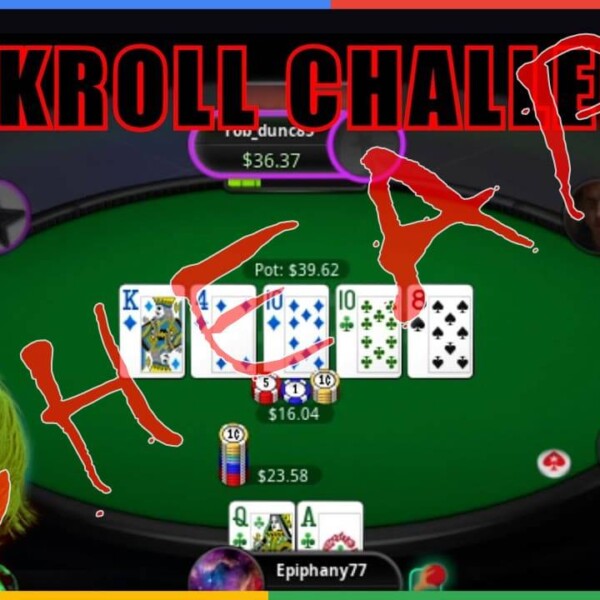 CHARLIE CARREL BANKROLL CHALLENGE