
🏆 Quick verdict
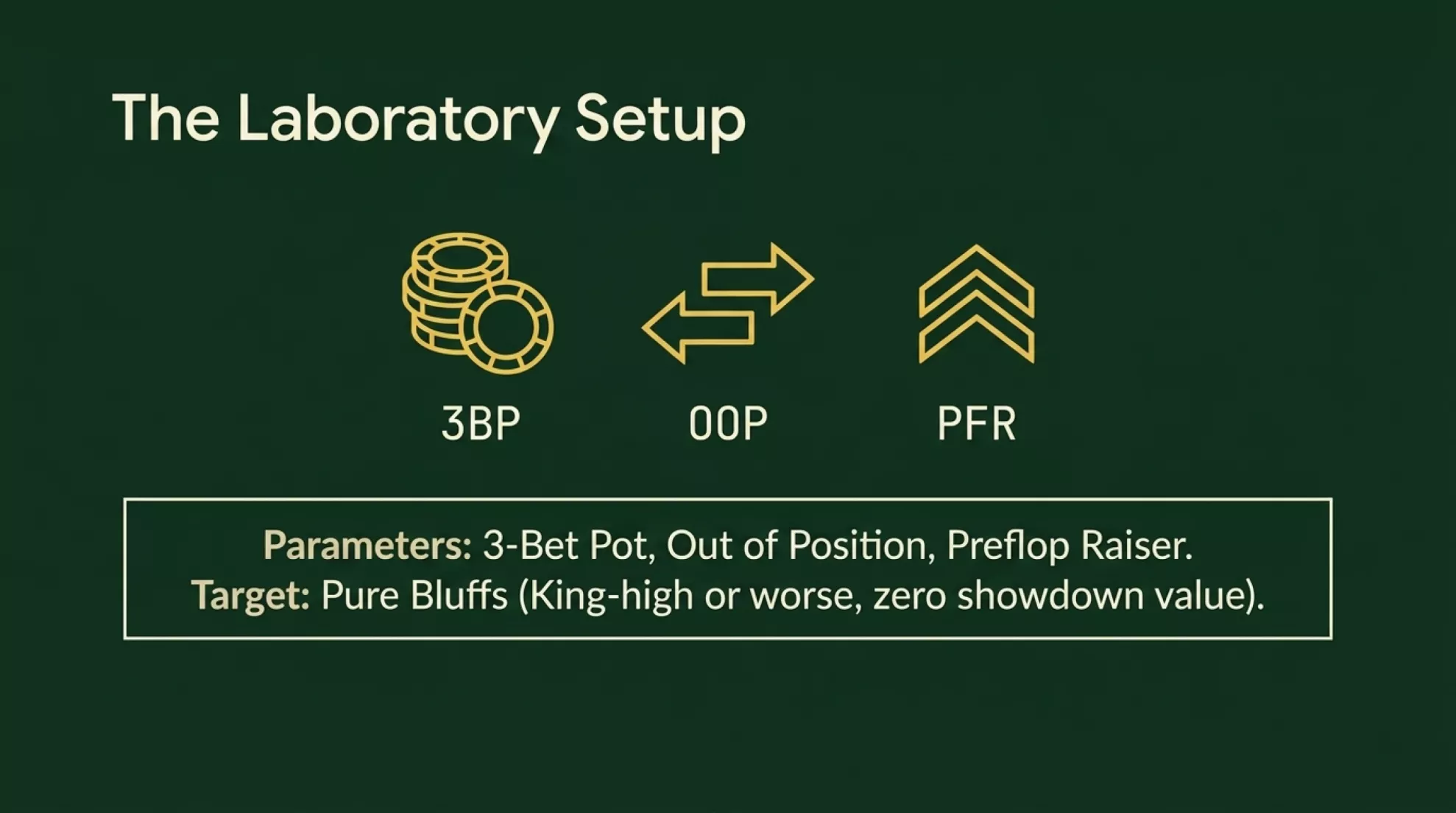
Read this if you play 3-bet pots out of position as the preflop raiser and want a method for choosing which air hands deserve a river bet. The lesson’s answer: sort your bluffs by suit, because the suit shows which of the defender’s continuing hands you block. It is a trend from a small sample, not a chart to memorise, and the complete video is unlocked through one short quest.
Sold with a FOREVER LICENSE: one payment, lifetime access, no subscription. Current offers are on the coupons page.
Read this first
Built Exclusively From the Transcript
This study guide is built exclusively from the transcribed lesson “Barreling the River as 3BP OOP PFR – Finding Pure Bluffs” by Nachos Poker, plus the video recap, audio recap, infographic and slides generated from that same transcript. Nothing is invented. There are no outside solver numbers, no extra hands and no results claims.
Source rule
If the speech-to-text garbled a number, a card or a name, we left it out. Where the lesson uses two filters (ace-high or worse, then king-high and worse), we simply say “air hands.”
This is a preview of a longer video, not a replacement for it. It tells you what the lesson finds and why; the full tables and hand-by-hand comparisons live in the video.
The question
Barreling the River in 3-Bet Pots: What Is Measured
Every river brings the same fork. You have no made hand to show down, the opponent called two streets, and you either fire a bet or check and give up. The lesson asks a sharper question than “should I bluff?” It asks which air hands make the best bluffs, and what separates them.
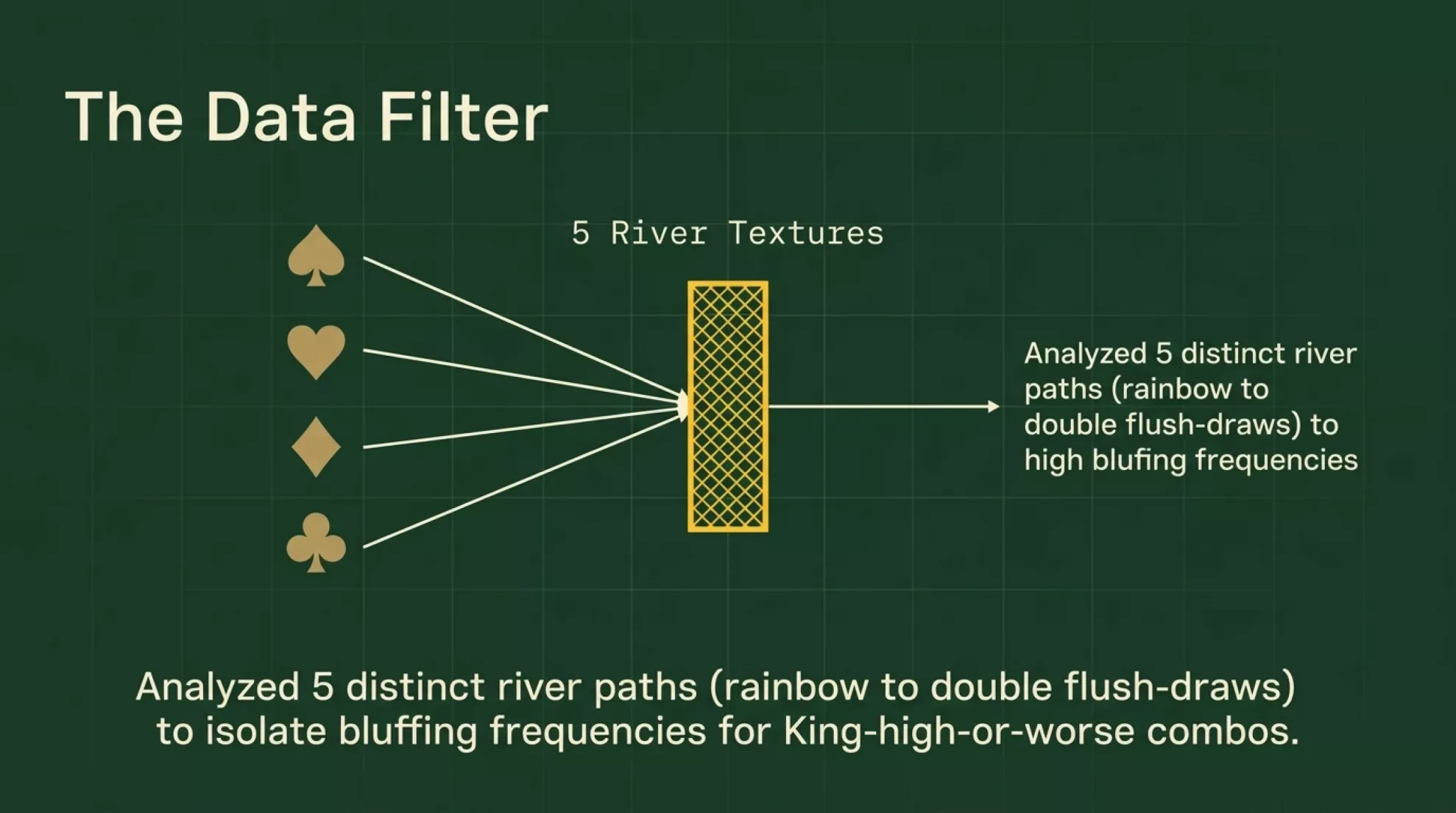
To answer it, Nachos Poker looks at the average river betting frequency of air hands (first ace-high and worse, then king-high and worse) across four river paths, and then splits every result by the suit of the hand.
4
river paths compared
5
boards averaged
4
suits split out
21+
minutes of lesson
Rainbow
A board with no flush draw.
Turn flush draw
The flush draw arrives on the turn.
Flop flush draw
A flush draw is on the flop.
Two flush draws
Two flush draws in play, the column he reads the suit split from.
He notes you could extend the list to flush-completing rivers or four-flush rivers. These four are simply the ones he picked.
Three formats
Watch, Listen, Skim: the Lesson in Three Quick Formats
The same transcript was turned into a short video retelling, a longer audio retelling and a one-page infographic. Start with whichever fits your day.
Watch: the video retelling
Prefer TikTok? Watch the same retelling there.
Listen: the audio retelling
Skim: the infographic
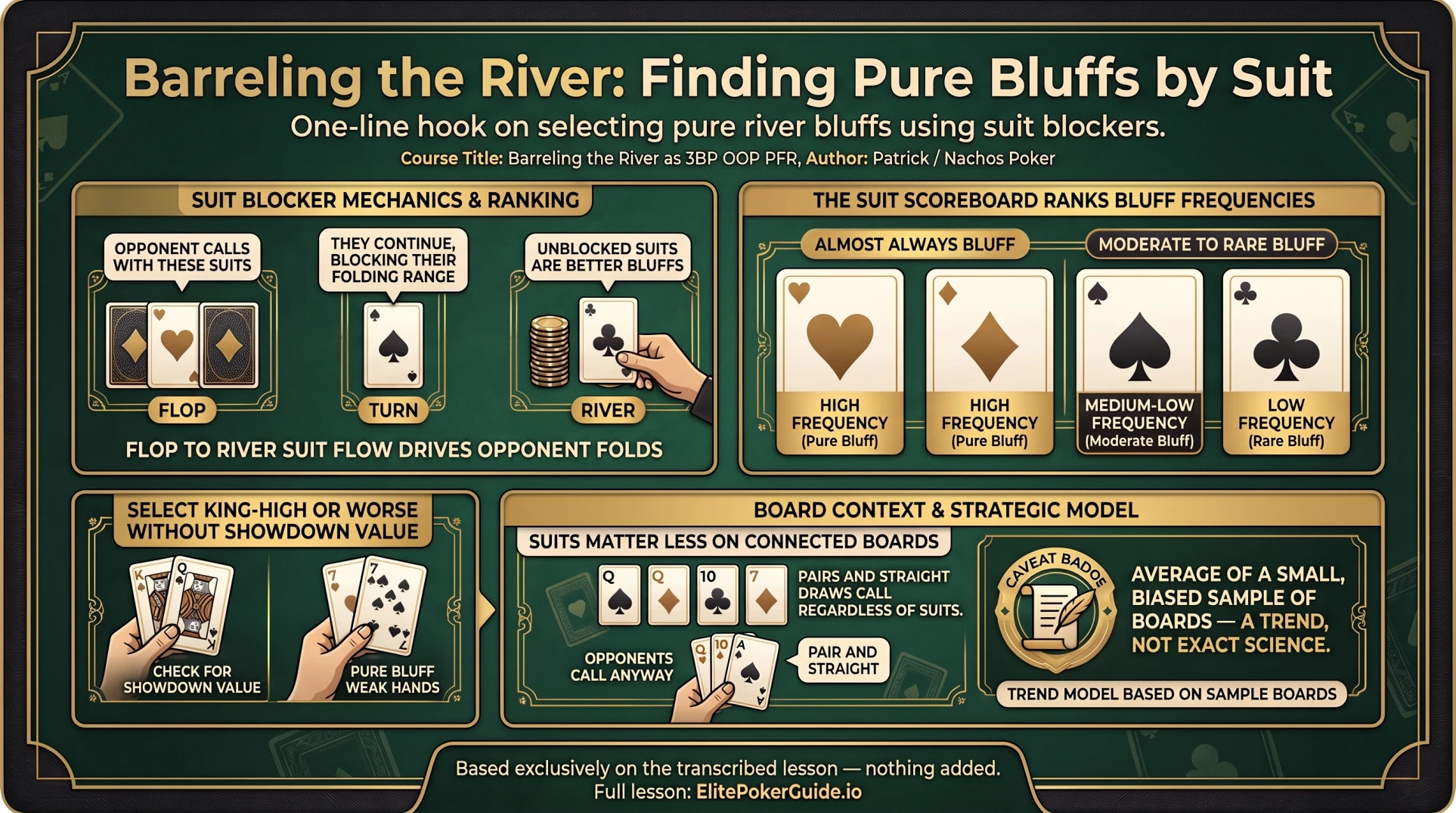
Both retellings and the infographic come from the same transcript as this article, so the same rule applies: exclusively transcribed data, nothing added.
The result
The Suit Scoreboard: Which Pure Bluffs Barrel Most
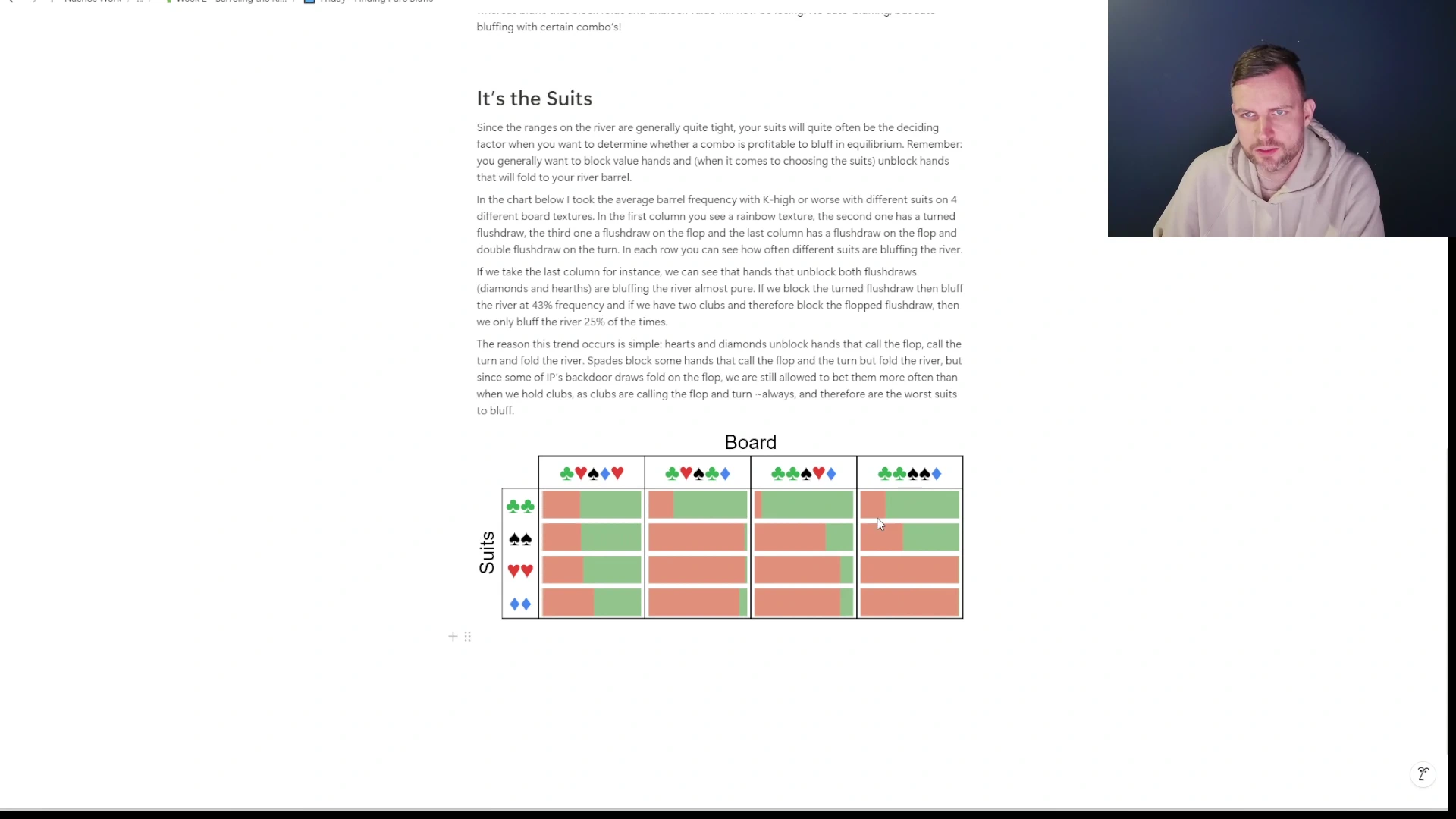
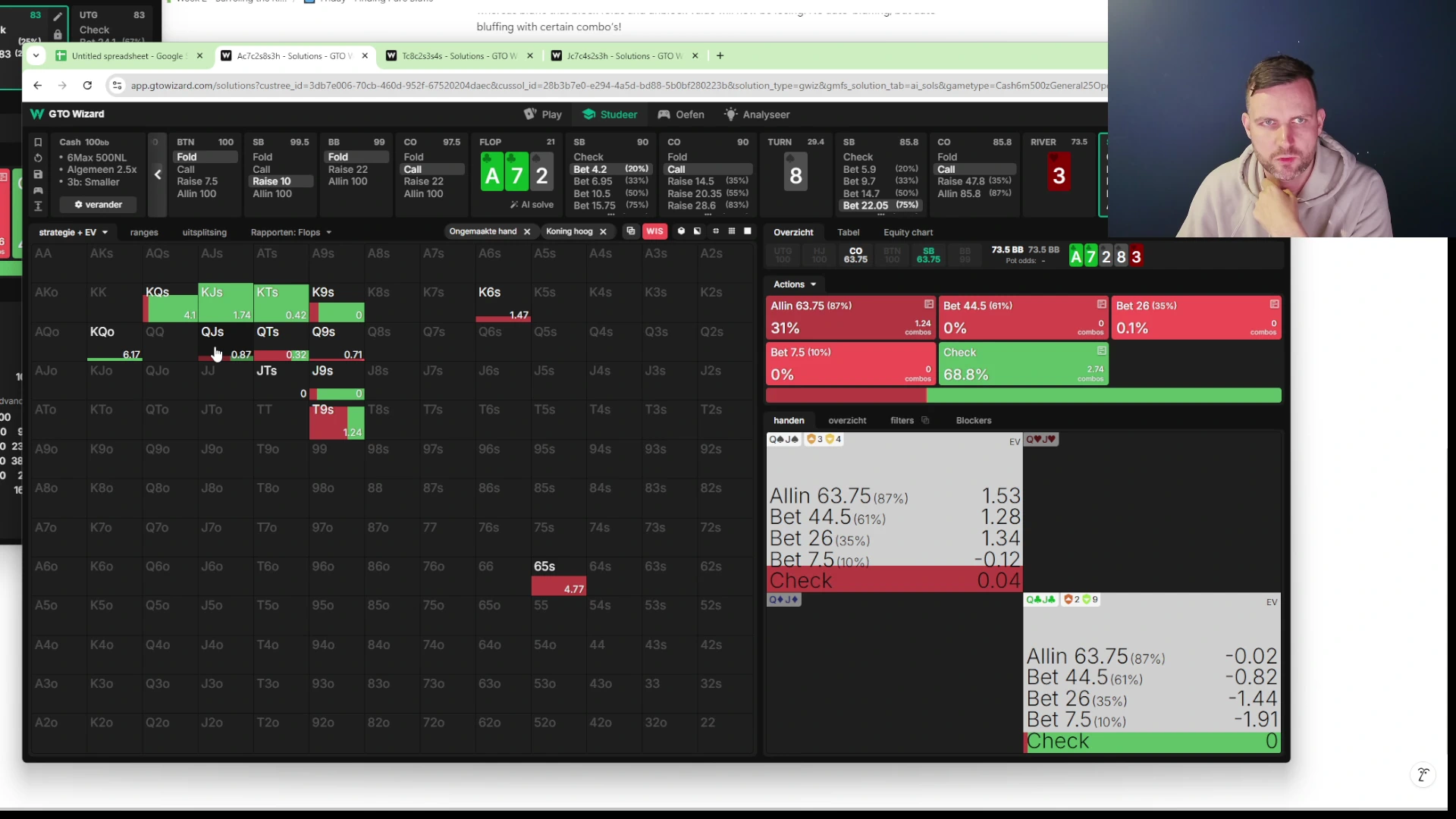
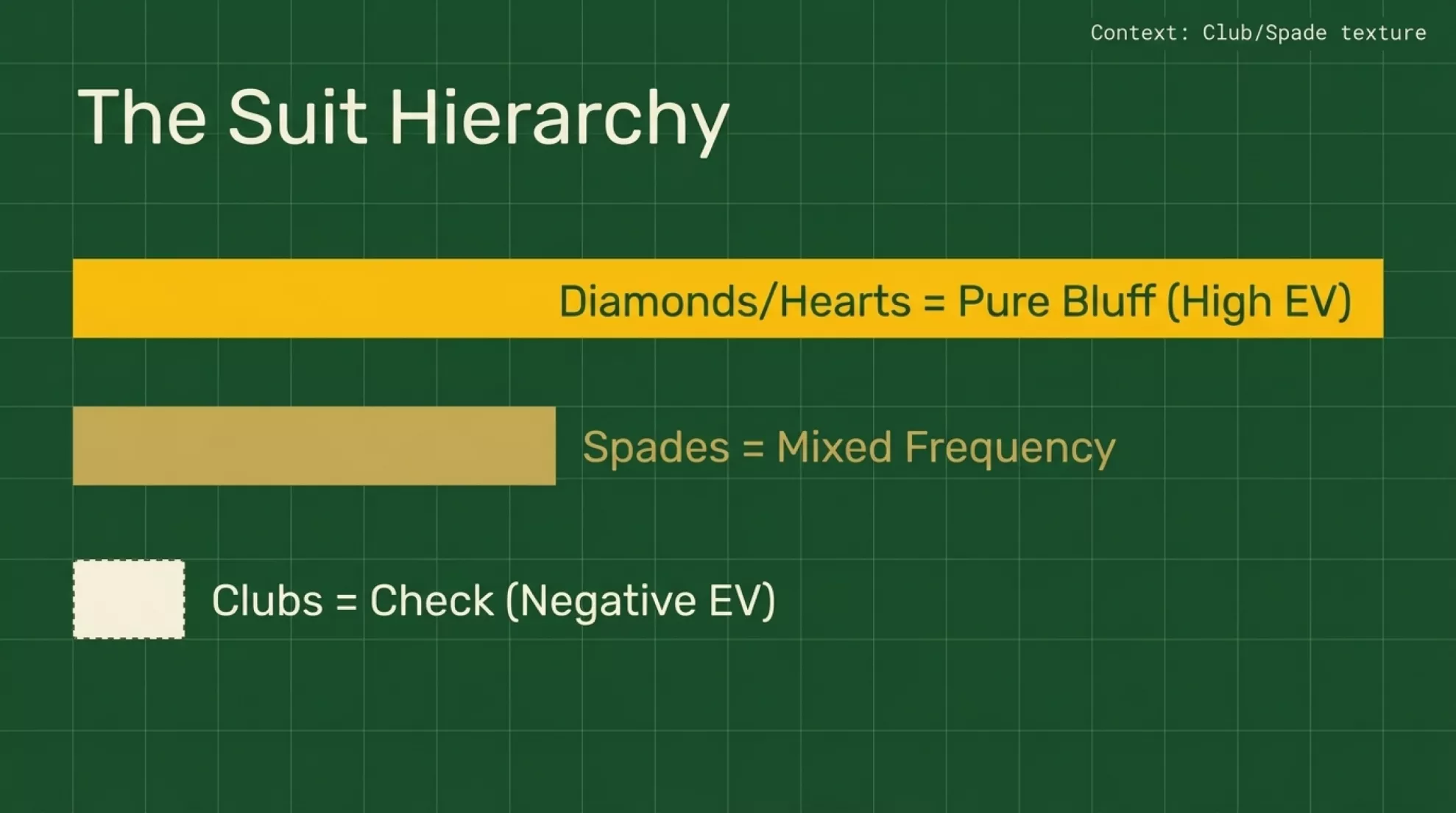
In the two-flush-draw column he reads out, the river picture is clear. Sorted by the suit of the air hand, the betting frequency falls into three bands.
Hearts
Bluff almost always. Hearts and diamonds sit at the top of the betting frequency.
Diamonds
Same story as hearts: pretty much always bluffing with them.
Spades
Slightly below medium frequency. A real step down from hearts and diamonds.
Clubs
Low frequency. The suit you barrel with least in this example.
These are qualitative bands. Nachos Poker does not present them as exact, and he adds that the suit is only a filter: some clubs block the opponent’s value hands and do a good job as bluffs.
Inside the lesson
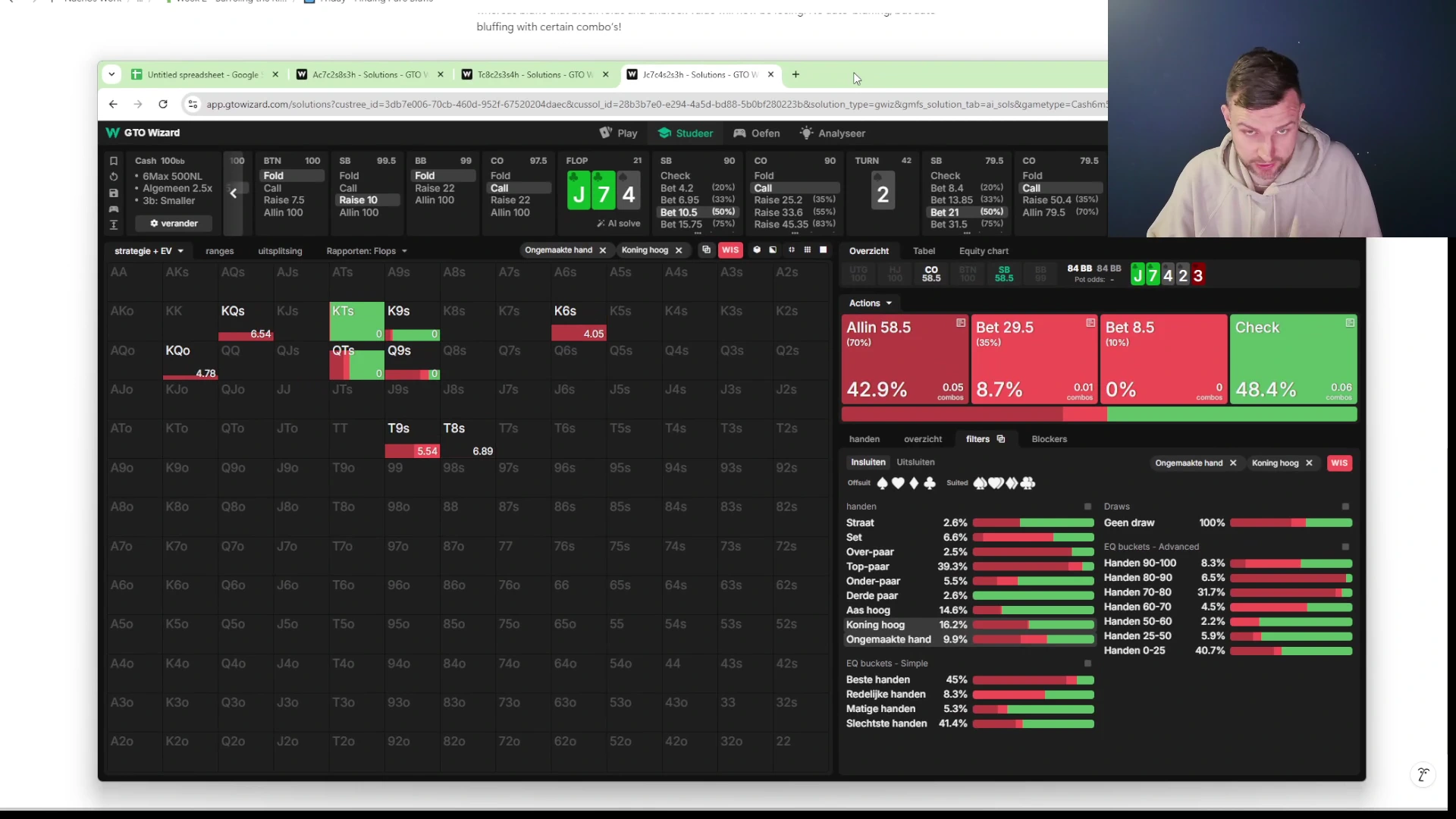
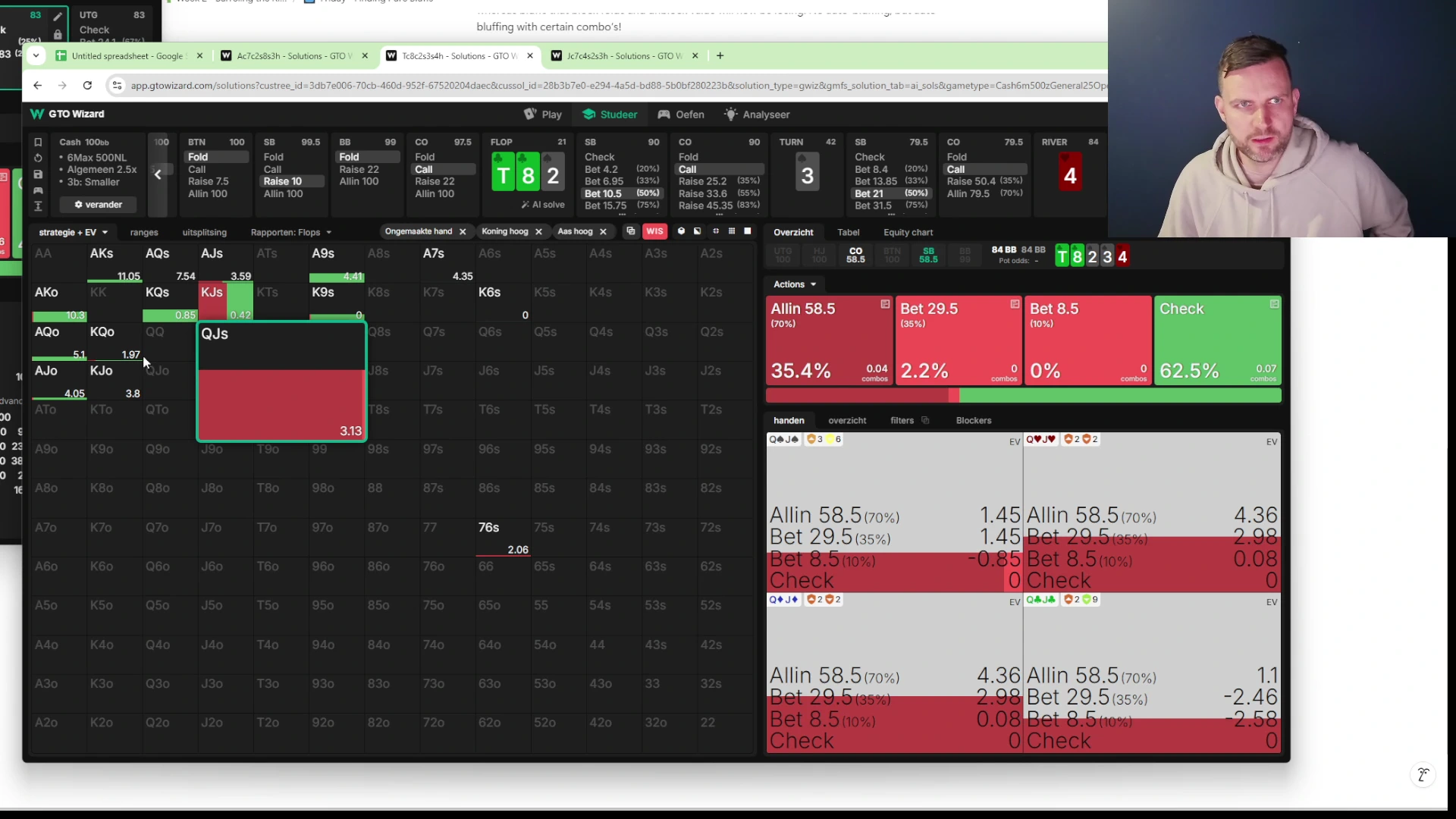
Same hand, different suit: the hand-by-hand section shows EV gaps between suits that you can measure in big blinds. The exact numbers are in the full video.
Swipe or scroll sideways for more frames →
The mechanism
Why Suits Decide Your Bluffs: Block the Folds
What matters is which of the opponent’s hands kept calling earlier. Nachos Poker walks the logic in three steps.
Step 01 · Flop
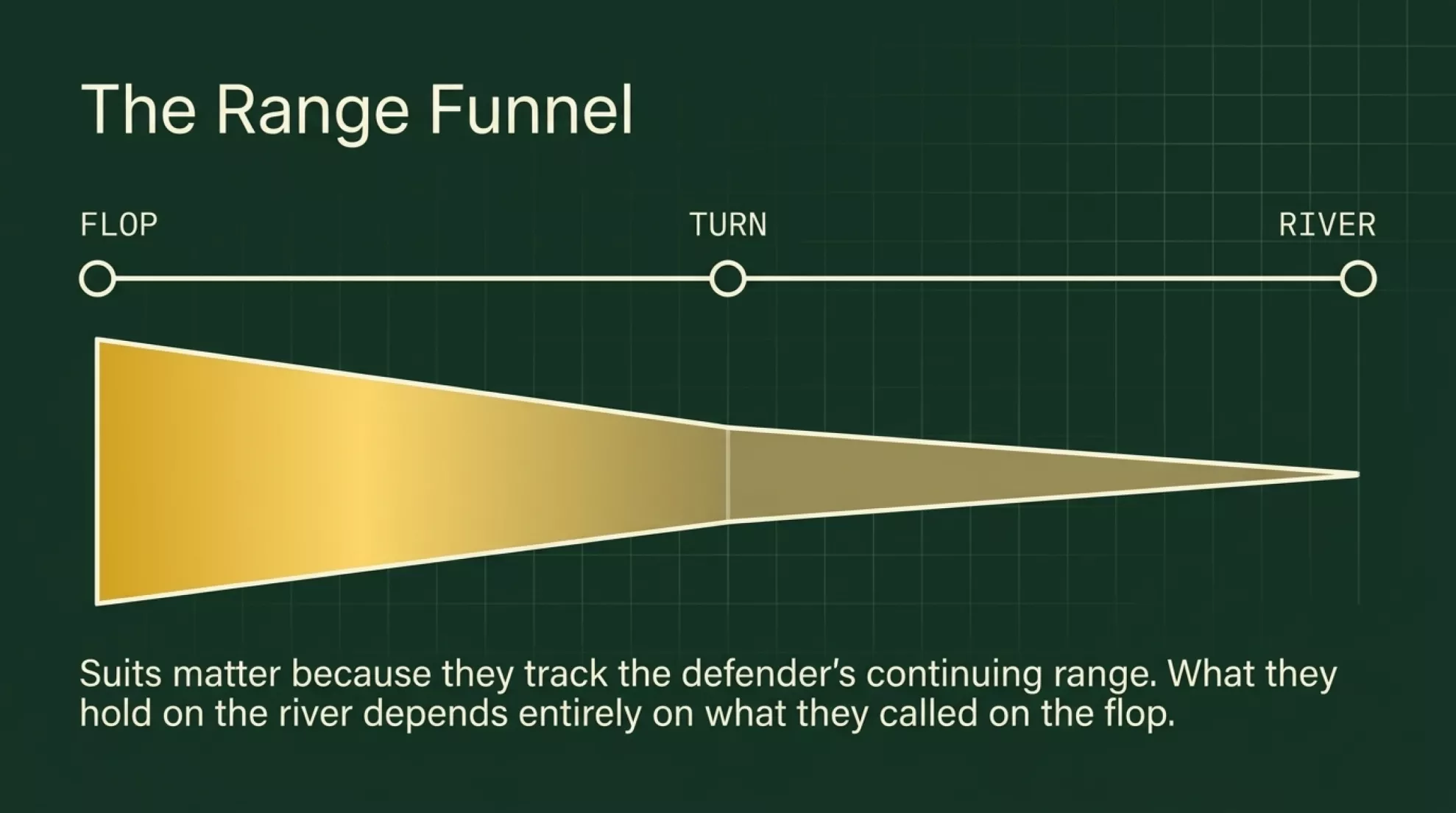
The defender’s suits are not equal
Filter the opponent’s continuing hands by suit on the flush-draw board. Among his air hands, clubs continue essentially every time, spades about half the time, and hearts and diamonds fold quite often.
Step 02 · River
Read the blockers
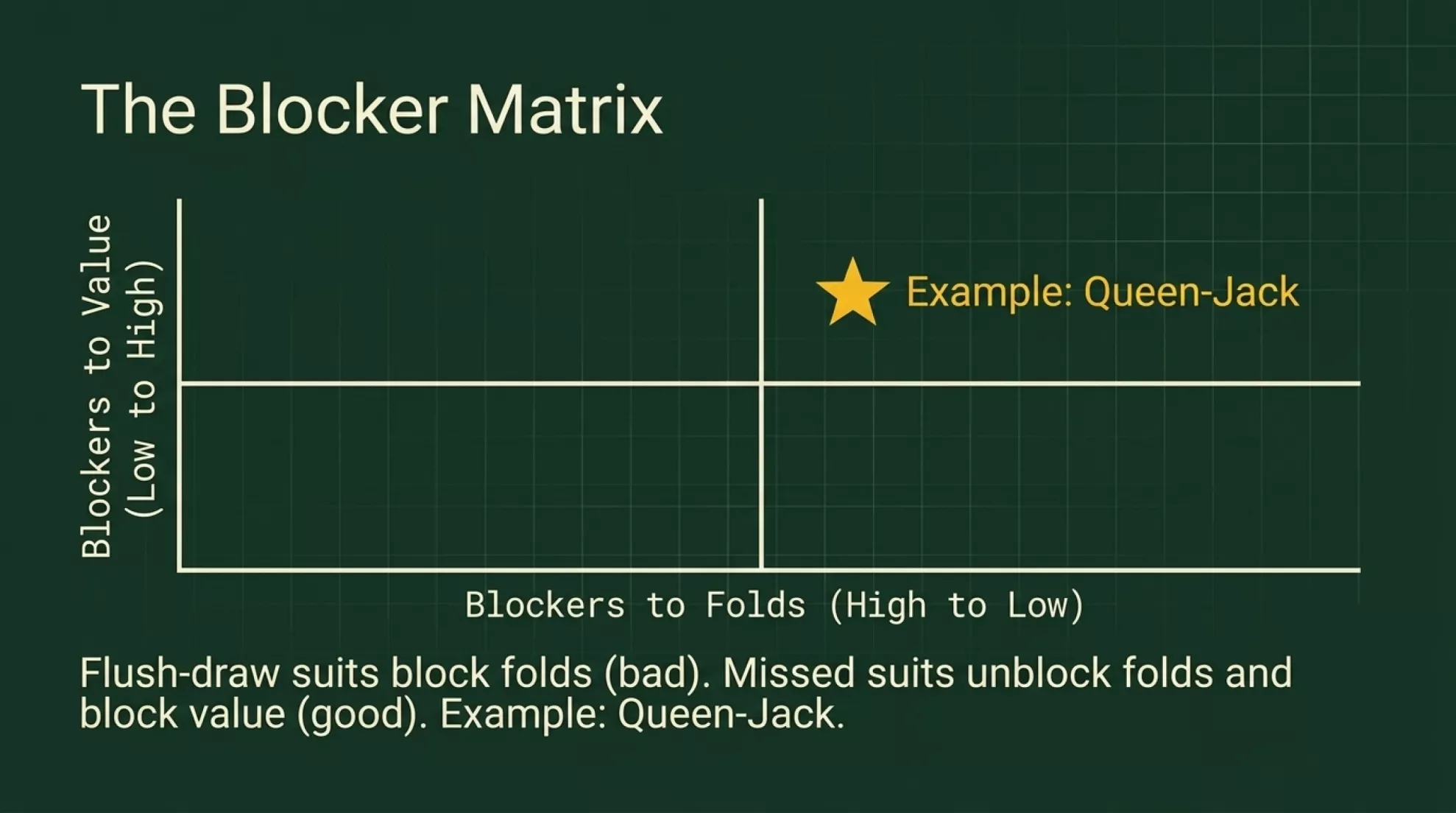
A club in your hand removes club combos that kept calling and would fold on the river, so you block folds, the last thing a bluff wants. Spades block part of that group. Hearts and diamonds barely touch it.
Step 03 · Caveat
A filter, not a verdict
Some clubs block the opponent’s value hands and are good bluffs. Use the suit to narrow the list, then judge the hand.
That is the point of the exercise. It explains why the frequencies look the way they do instead of leaving you with a table to memorise.
The exception
When Pairs and Draws Do the Calling: Suits Matter Less
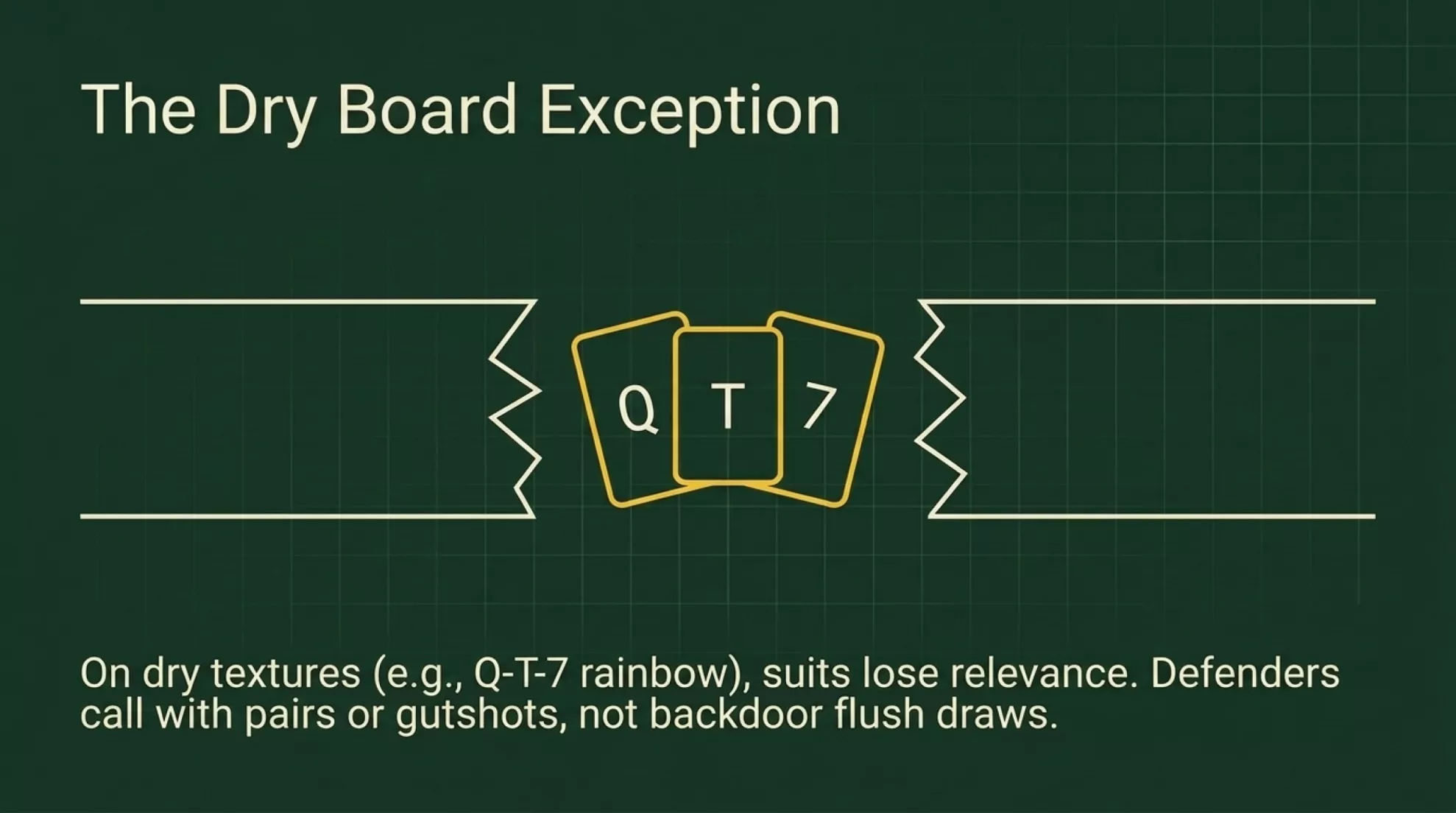
Not every board is a suit board, and barreling the river works differently when pairs and draws do the calling. On a board like Queen-10-7, the lesson points out that suits matter less. The defender’s calling hands are pairs and straight draws, and backdoor flush draws are not what keeps him in the pot, so there are few suit-specific hands for you to block.
Our takeaway: before sorting your bluffs by suit, ask what the opponent is calling with. If it is suited draws, the suit matters. If it is pairs and straight draws, it matters much less.
Hand selection
From Averages to Real Bluffs: Hand Selection
Averages tell you where to look. Then you still have to pick actual hands, and the lesson gives four points for doing it.
Sort by suit, then by blockers
Among air hands, find the ones whose suit unblocks the defender’s folds. Those are the bluffs that generate EV.
Some hands stay good bluffs
On the board he shows, Queen-Jack is a very decent bluff even with clubs or spades.
Showdown value can say check
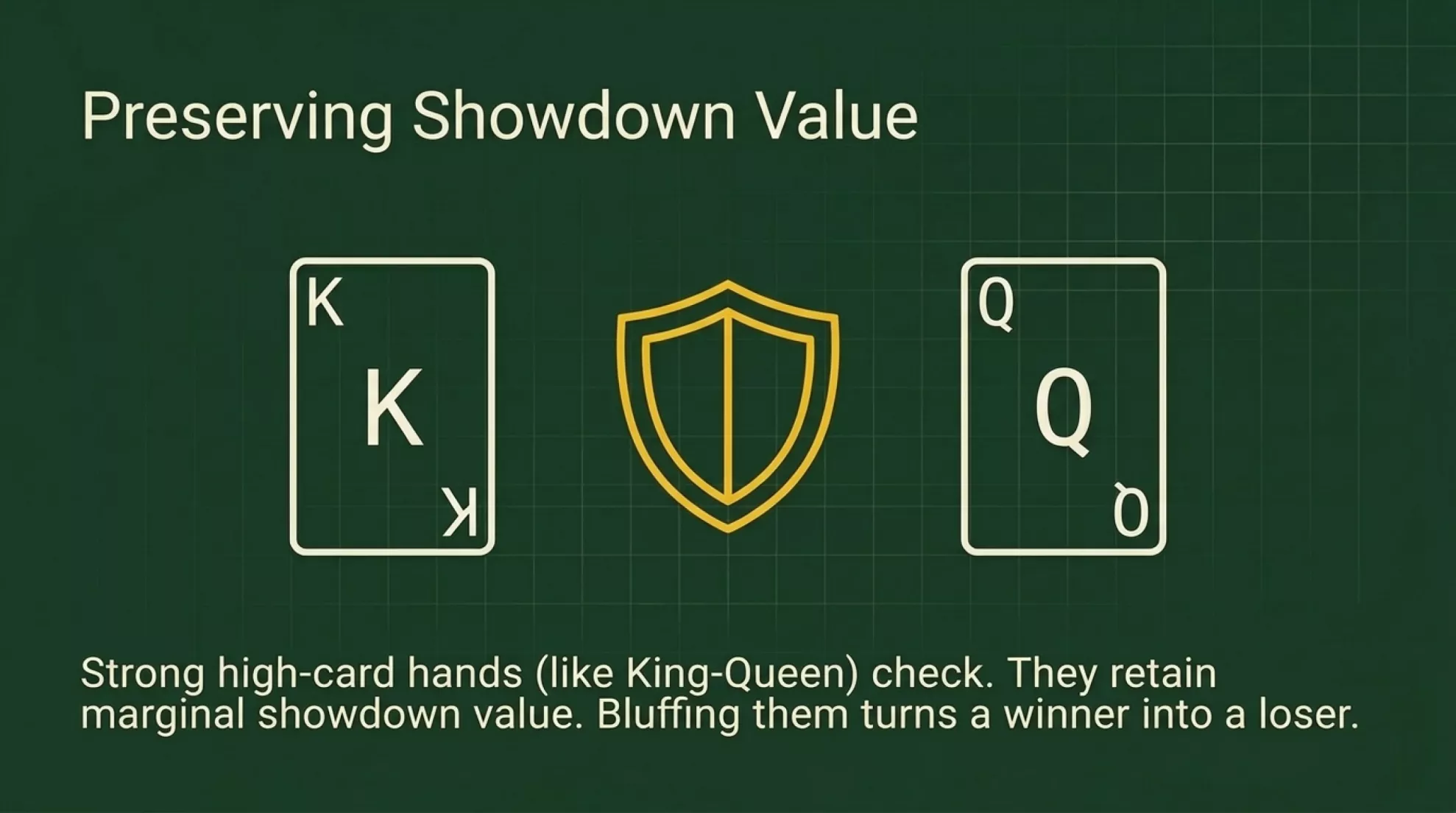
On the last board he shows, King-Queen is often a check: it is only king-high, and checking is highly valued there. King-Jack in hearts or diamonds shows up as a bluff at some frequency. With something like Jack-high, checking is about zero and bluffing clearly profitable.
Balanced defence changes the plan
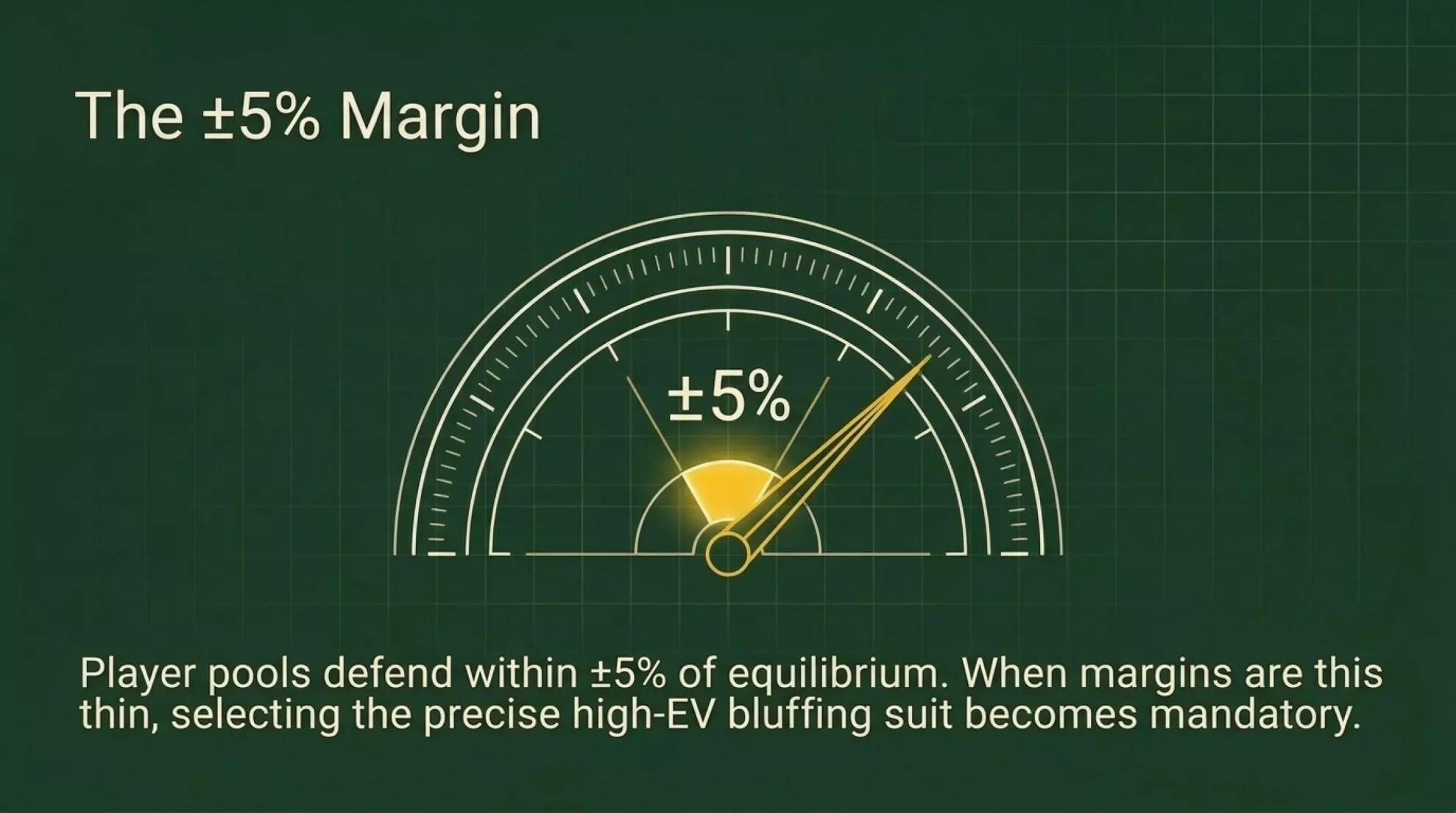
He treats defence within about five percentage points either side of balanced as roughly balanced. That means no obvious case to overbluff, so pick the bluffs that earn the most.
He also compares the same kind of hand across suits, and the EV gap is measurable in big blinds. A barreling the river plan built on rank alone ignores that gap.
One street earlier
The Turn Mirror: Same Logic, Earlier Street
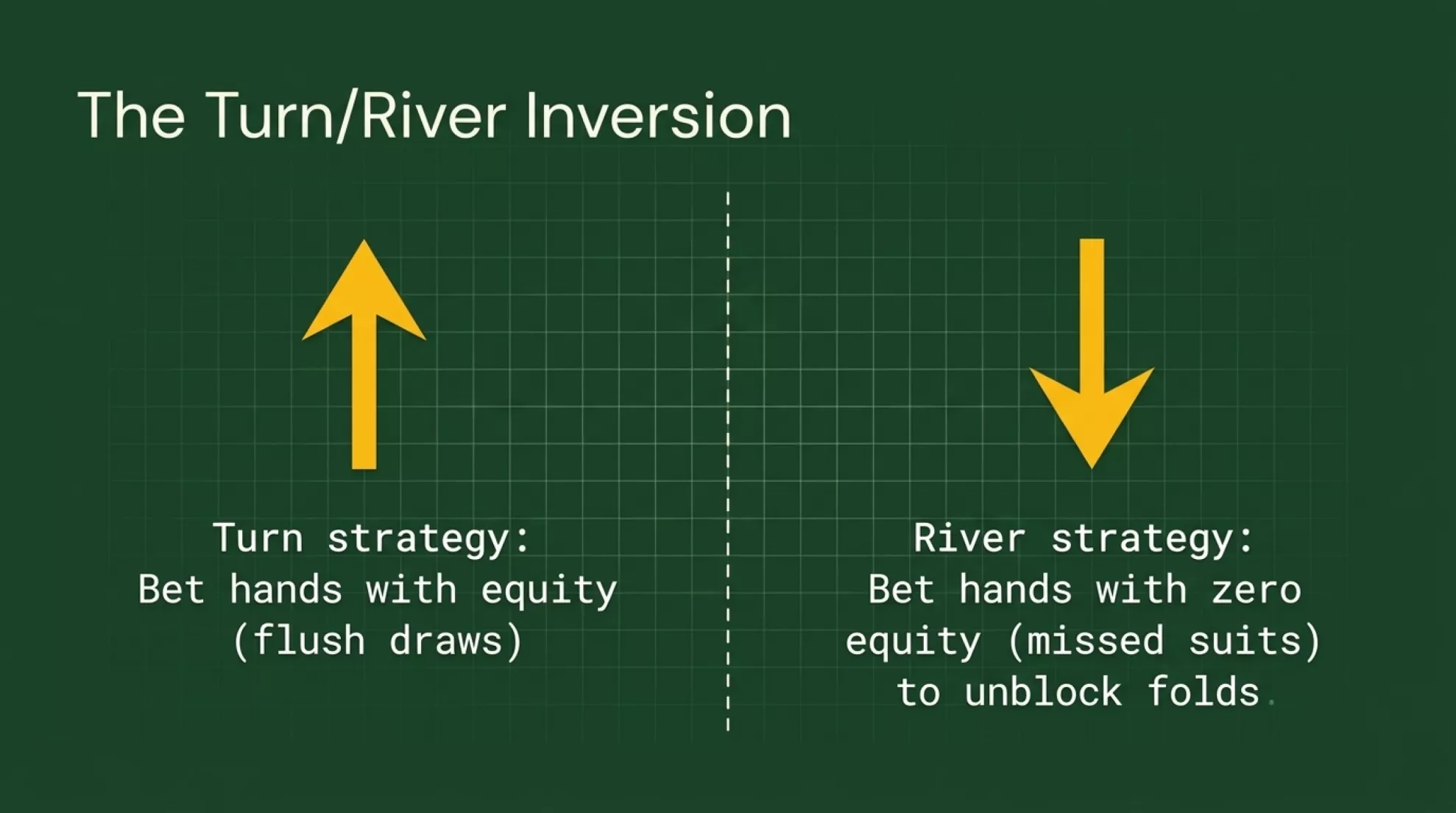
Near the end, he sketches the same logic on the turn in a few remarks. Hands with equity, such as flush draws, get bet more often than hands with no equity.
He says you will find similar trends on the turn, and suggests going through all the boards if you are interested, to understand how and why suits matter.
Want the whole lesson, not the summary?
The full video shows the tables and the hand-by-hand comparisons this guide only describes. Check active pricing on the coupons page. Every course is a FOREVER LICENSE, sent personally by our team after payment.
Your study drill
Your Study Drill: Run the Exercise Yourself
The lesson doubles as a repeatable method for barreling the river. Our four-step version of it, one board family at a time:
To run it yourself, start with our guide to using PioSOLVER in real games and the piece on how to study poker effectively. For when to deviate from solver play at all, read GTO vs exploitative poker.
14 slides
The 14-Slide Briefing in One Swipe
Prefer to skim? The whole lesson in fourteen slides. Scroll sideways to move through the deck.
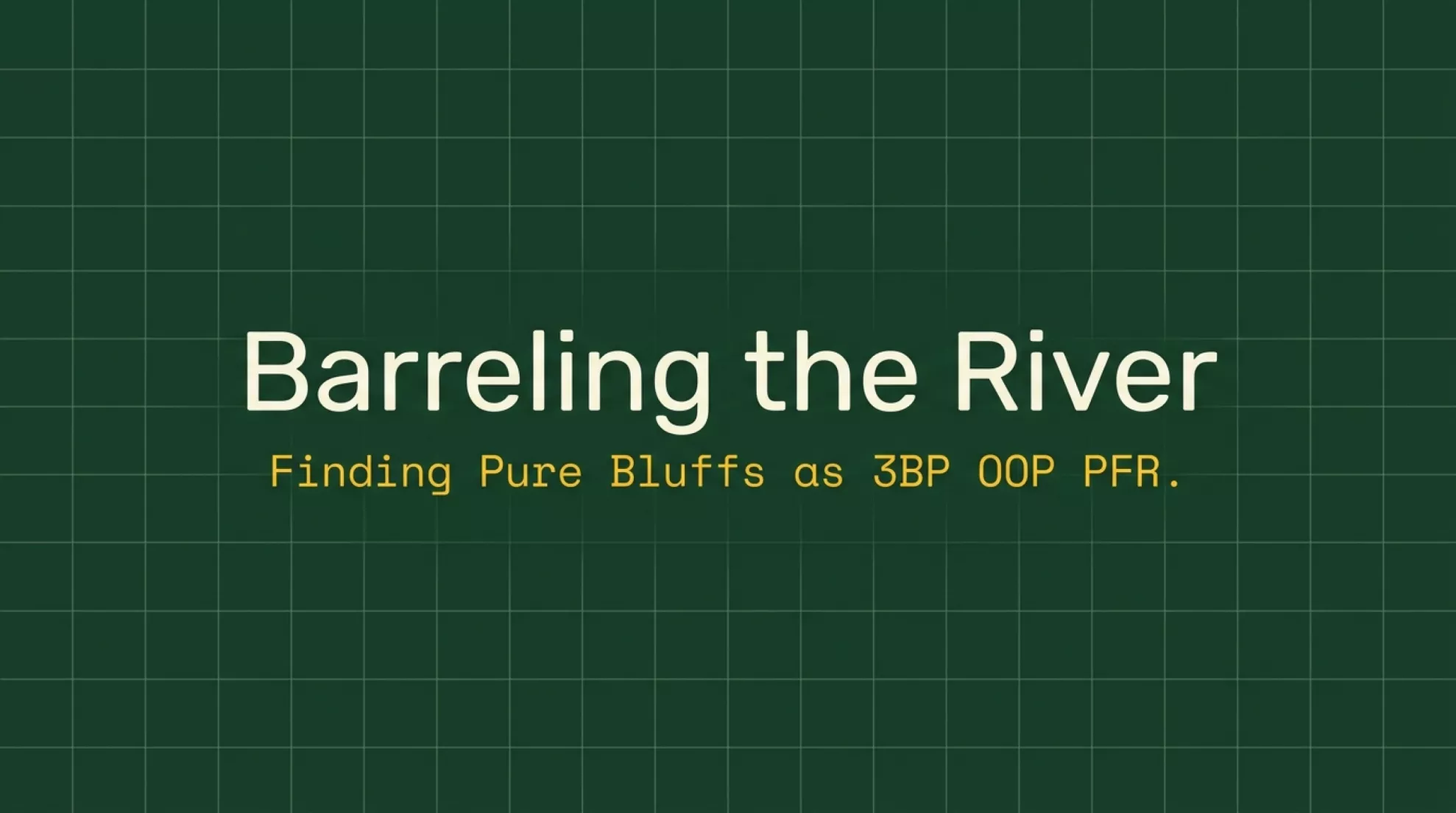
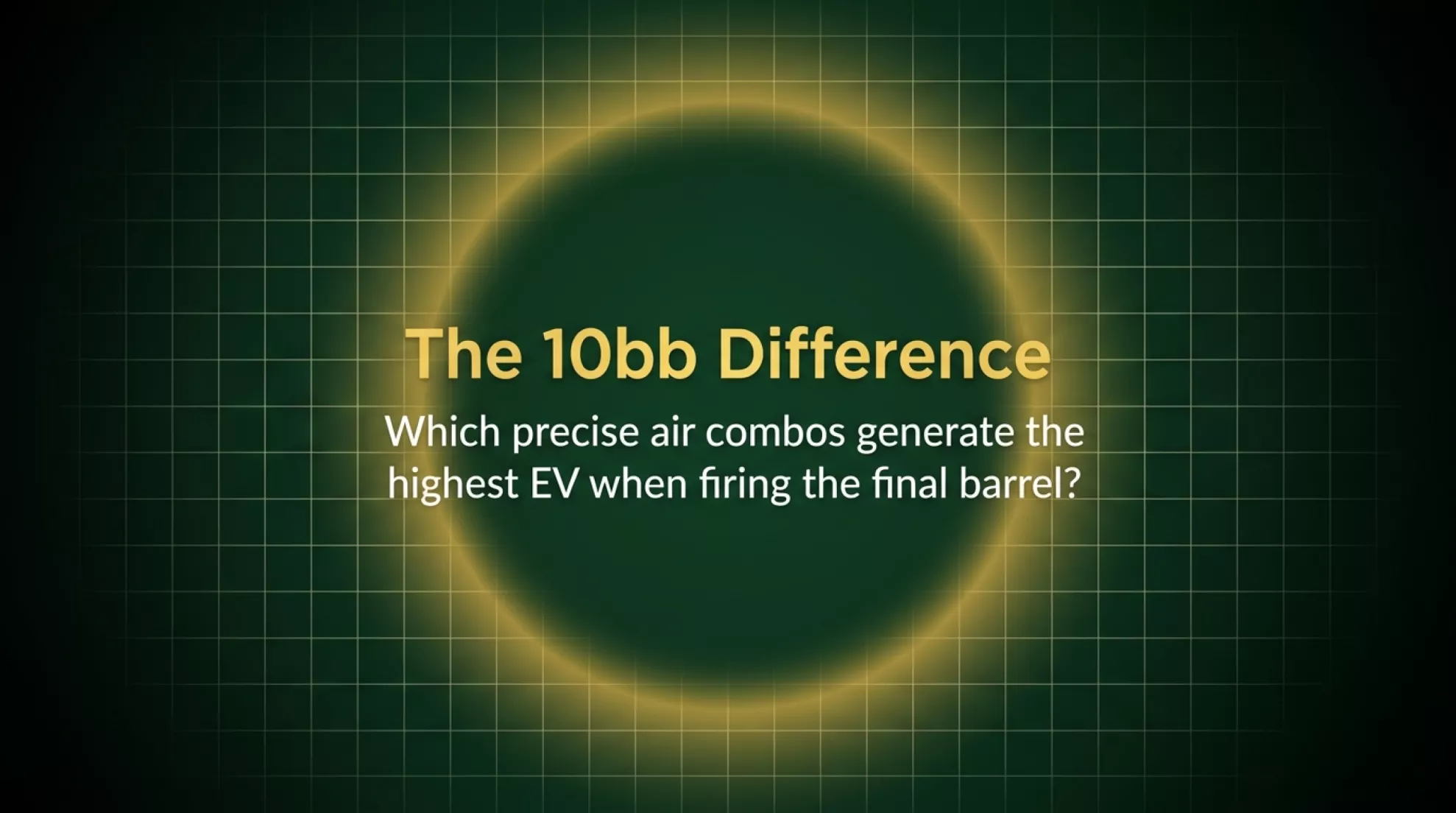
14 slides, swipe or scroll sideways →
Honest limits
Honest Limits of This Model
The lesson on barreling the river is candid about its own weak spots, and so are we.
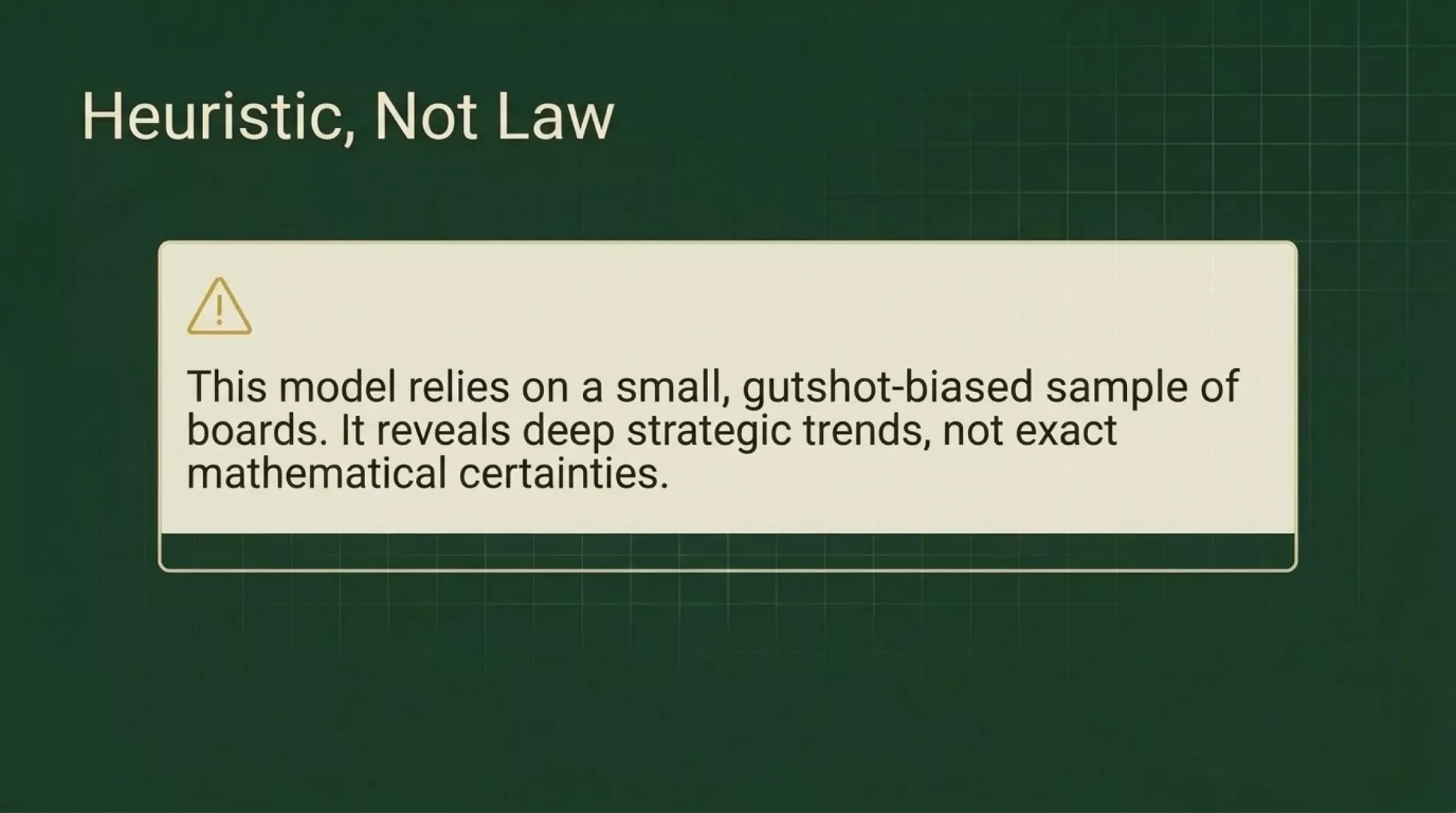
- A small sample. The averages come from five boards, and the author says it is not enough boards for a reliable average.
- A biased sample. He mostly picked boards heavy on straight draws, so a different pool of boards would push the numbers up or down.
- Averages, not exact science. He calls the bluffing frequencies an average and a rough model that shows trends.
- Speech-to-text noise. Some numbers and hands in the transcript are garbled, so we left them out.
- A preview only. The full video carries the tables and the hand comparisons.
Exclusively transcribed data. Nothing is invented. No win-rate promises. Poker involves risk and this is educational content for adults. If gambling stops being fun, take a break and talk to someone you trust.
Quiz
Test Yourself: The Barreling the River Quiz
Five questions, Easy to Brutal. Every answer names the part of the lesson it comes from.
Barreling the River Quiz
5 questions, Easy to Brutal. Every answer names the part of the lesson it comes from.
In short
Key Takeaways in 60 Seconds
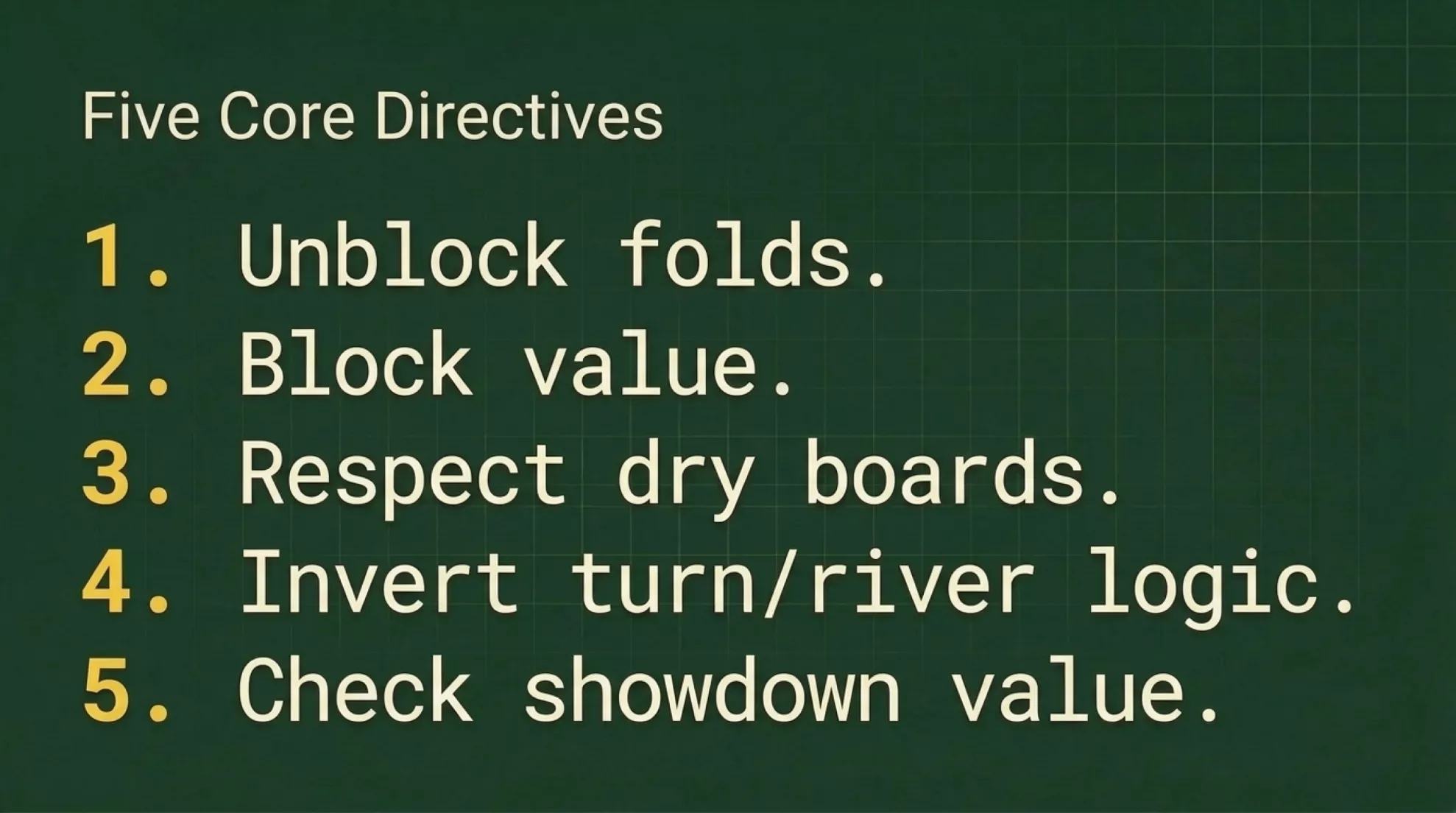
- Barreling the river is a selection problem: not all air hands are equal bluffs.
- Barreling the river with the wrong suit can mean blocking the very folds you need.
- The suit works as a proxy. It tells you which of the defender’s continuing hands you block.
- In the featured two-flush-draw column, hearts and diamonds bluff almost always, spades slightly below medium, clubs low.
- Where pairs and straight draws do the calling, as on Queen-10-7, suits matter much less.
- Not every king-high bluffs: on his last board King-Queen is often a check, while Jack-high checks about zero.
- Five boards give a trend, not exact science. Verify it in your own study.
The quest
Unlock the Full Lesson: One Quick Quest
This barreling the river guide is the map. The territory is the video: the exact tables, the hand-by-hand EV comparisons behind the scoreboard above.
To get the complete training video, you complete one short, easy quest. Finish it and the full lesson is yours. Curious what the tables really show for your favourite bluff?
There is an active coupon on the coupons page.
More from the coach
More From Nachos Poker on Elite Poker Guide
If this lesson made you want more data-driven study, his flagship on our shelf is Run It Once: Dominate With Data, with 74 training videos and 16 MDA cheat-sheet PDFs. 3-bet pots out of position get their own 10-video part. Read how that approach works in our guide to exploiting poker opponents with MDA.
Run It Once Monthly Elite Calls 2025
Run It Once Holdem 2025
Run It Once Live Seminars
Run It Once Essential Holdem 2024
Run It Once Elite Holdem 2024
Run It Once Essential Holdem 2023
Run It Once Holdem Learning Path 2025
Run It Once Elite NLHE 2023
Browse every title in the Run It Once courses category, the Run It Once brand page or the full Run It Once catalog. For the wider picture, see our Run It Once review.
Who it is for
Who This Study Guide Is For
Choose it if you…
- ✓Play 3-bet pots out of position as the preflop raiser
- ✓Want a method for picking which air hands to barrel on the river
- ✓Like data-driven study and are ready to run an exercise yourself
- ✓Want to understand blockers through the opponent’s continuing range
Skip it if you…
- ✕Want a ready-made chart to memorise (the lesson itself says it is approximate)
- ✕Need exact frequencies for every board
- ✕Do not plan to open a solver or database yourself
- ✕Expect a guarantee of results (nothing here promises any)
FAQ
Barreling the River FAQ
Quick answers to the questions barreling the river raises most often in this lesson.
What does barreling the river mean?
It means betting the river. The lesson studies a narrow version of it: which air hands should bet the river in a 3-bet pot out of position as the preflop raiser (the spot in the title).
What is a pure bluff in this lesson?
An air hand with no made hand to show down. Nachos Poker filters for unmade hands (ace-high or worse, then king-high and worse), and compares how often each suit bets the river.
Does the suit of my blocker change my river bluff?
In his data it does. In the two-flush-draw column, hearts and diamonds bluff almost always, spades slightly below medium and clubs at a low frequency. It is an average, not an exact rule.
Why do clubs bluff least in his example?
The opponent’s continuing hands on the flop and turn were heavy in clubs. Holding a club on the river blocks hands that would fold, which weakens a bluff.
Do suits matter on every board?
Much less. On a texture like Queen-10-7 the defender calls with pairs and straight draws rather than backdoor flush draws, so there is little suit-specific to block.
How reliable are these numbers?
Treat them as a trend. The averages come from five boards, the sample leans toward draw-heavy textures, and the author himself calls it rough rather than exact science.
How do I get the full lesson, and how are files delivered?
Complete the short quest above to unlock the full training video. Digital files. Crypto payment only. Fast delivery is handled manually after payment confirmation. Download links remain available for 7 days; save your files locally.
FOREVER LICENSE
Own it. Don’t rent it.
Subscriptions expire; a FOREVER LICENSE never does. One payment, lifetime access, no subscription. Start with Freenachos’ flagship, Run It Once: Dominate With Data.
✓ One payment · ✓ Lifetime access · ✓ Sent personally by our team after payment
Digital files. Crypto payment only. Fast delivery is handled manually after payment confirmation. Download links remain available for 7 days; save your files locally. See how to pay, how to buy cryptocurrency and why buy here.
ElitePokerGuide home
All poker courses
Cash poker courses
More study guides
Nachos Poker coach page
Why you’re bluffing the wrong hands
Poker sizing tells study guide
Turn check-fold, river bluff
Garrett Adelstein solver study method
Poker shop
 Solve For Why 3-BET POTS: A Guide To Flop Decisions with Landon Tice
 Upswing Poker Lab: Tournament Starter Pack 2025
 Upswing Poker Lab: Online Cash Game Crash Course 2025
 Best Poker Coaching Intermediate Heads-Up Group Sessions CFP