Pot-Limit Omaha is one of the easiest poker formats to study badly.
That sounds harsh, but it is true.
Most players approach PLO study like content collection. They watch random videos, jump from solver screenshots to live play clips, memorize a few flashy ideas about blockers, and then wonder why their results stay flat. The problem is not usually effort. The problem is structure.
If you want to study PLO effectively in 2026, you need a system that matches the actual shape of the game. PLO is not just “Hold’em with four cards.” Hand values run closer, nuttiness matters more, board coverage changes faster, multiway dynamics matter more often, and positional mistakes become expensive much earlier. That is exactly why a proper PLO study plan has to start with foundations, then move into pattern recognition, then solver interpretation, then format-specific specialization. The good news is that Elite Poker Guide already has the course ecosystem to support that path, from beginner-friendly micro and low-stakes study routes to mid-stakes and advanced PLO material across 4-card, 5-card, 6-card, bomb pots, and solver-heavy study. Start with the main Elite Poker Guide, keep this article as your anchor at How to Study PLO Effectively, and use the full PLO Poker Courses category as your central course hub.
The first thing to understand is that effective PLO study is not one lane.
There are really four major lanes you need to combine:
1. Fundamentals
You need a clean mental model for hand strength, equity realization, nut potential, position, SPR, and how board texture changes your incentives.
2. Pattern study
You need repeated exposure to recurring spots: single-raised pots, 3-bet pots, blind defense, monotone boards, straight boards, paired boards, and common turn/river transitions.
3. Review and feedback loops
You need a process for studying your own mistakes, not just admiring other people’s solutions.
4. Format specialization
At some point, you need to narrow in on the exact version of PLO you actually play: 4-card cash, 5-card, 6-card, bomb pots, live full ring, MTTs, or small-stakes online pools.
Tournament players should also study format-specific PLO material, not only deep-stack cash-game theory. A strong next step is our Upswing Poker Crushing PLO Tournaments Review, where we break down Dylan Weisman’s 92-video PLO MTT course covering ICM, stack-depth strategy, bubble play, and final table review.
That is where most players go wrong. They try to skip straight to lane four without building lanes one through three first.
Related PLO study paths: Best Micro PLO Courses 2026 · Best Low Stakes PLO Courses 2026 · Best Mid Stakes PLO Courses 2026 · Best High Stakes PLO Courses 2026
Step 1: Build your PLO foundation before chasing advanced theory
If you are still unclear on why certain starting hands perform better, why position matters so much more in Omaha, or why medium-strength hands become disasters in the wrong SPR and board classes, then advanced solver work is not your first priority.
Your first priority is building a language for the game.
That means learning how PLO hands are constructed, how equity distributes across different flop types, why nuttiness dominates low-quality connectedness, why domination matters so much in multiway pots, and why OOP play is punished so heavily compared to NLHE. The PLO content already published on Elite Poker Guide reflects this ladder clearly: the micro-stakes PLO roundup leans toward entry-level and bankroll-building study, the low-stakes layer adds stronger technical material, and the mid-stakes layer pushes harder into solver-backed and more advanced technical development.
For true beginners, your job is not to “study everything.” Your job is to make the game less blurry.
A good starting pool here is:
- Best Micro PLO Courses 2026
- Best Low Stakes PLO Courses 2026
- PLO QuickPro category
- PLO QuickPro Manual
- Free Poker Courses
These are the kinds of materials that help you stop guessing. The micro and low-stakes pages already position courses like PLO Fundamentals, Start The Climb, Run It Once From The Ground Up PLO, small-stakes material, and beginner-to-intermediate PLO QuickPro content as the right early-stage learning route.
Step 2: Learn in spot families, not in random clips
PLO punishes random study more than almost any other mainstream format.
Why? Because the game is too wide and too volatile for isolated tips to hold together unless you place them inside a structure.
So instead of studying one sexy hand review, then one live session, then one river bluffing clip, group your study into spot families:
- SRP as preflop raiser
- SRP as caller
- 3-bet pots IP
- 3-bet pots OOP
- BB defense
- SB response structure
- monotone flops
- straight-heavy flops
- paired boards
- turn barreling spots
- river bluff-catch and value thresholds
This is exactly why structured PLO products matter. The indexed PLO QuickPro line on the site is organized around targeted subskills like postflop power, out-of-position mastery, 3-bet pots, and broad category progression inside one brand system. That is a much better way to improve than consuming PLO theory as entertainment.
For players moving from soft low-stakes pools into more serious technical study, I would organize the next layer like this:
- PLO QUICKPRO POSTFLOP POWER
- PLO QUICKPRO OOP MASTERY
- PLO QUICKPRO ELITE
- PLO QUICKPRO 3BET POTS GAME THEORY AND PRACTICE
The reason this works is simple: you are not just “studying PLO.” You are building repeatable competence in recurring nodes.
Step 3: Use solver study as interpretation training, not screenshot collecting
One of the biggest leaks in modern PLO study is fake solver work.
A player opens Monker or reviews someone else’s outputs, sees a frequency mix, notices a strange check or tiny bet, and thinks they are doing advanced study. Usually they are not.
Real solver study means answering questions like:
- What is the range interaction on this board?
- Which hands are betting for denial versus value?
- Which hands are checking because of future street realization?
- What changes when stacks deepen?
- What changes when the board gets wetter or more paired?
- Which simplifications are safe for my actual games?
That is why players who are solver-aware but structurally weak often improve very little. They can repeat outputs, but they cannot transfer them.
Elite Poker Guide’s existing PLO ecosystem already separates these levels well. The mid-stakes PLO roundup specifically pushes toward solver-backed technical study, while the site’s recent PLO6 strategy article shows the same logic in a more advanced variant: use theory, combinatorics, and equity-driven thresholds to build decisions, not just memorize lines.
A smart progression looks like this:
Early stage: learn concepts
Middle stage: review structured examples
Later stage: compare your assumptions to solver outputs
Final stage: simplify those outputs into rules you can actually execute
If you skip the simplification step, you will sound smart and still play badly.
Players looking for cheap PLO courses can also use our broader buying guide to compare structured Omaha training alongside other poker formats.
Step 4: Match your study to your exact format
A huge PLO mistake is saying “I study Omaha” as if 4-card cash, 5-card, 6-card, live full ring, bomb pots, and PLO MTTs are the same project.
They are not.
Your study should narrow once your foundation is stable.
If you play mostly standard 4-card online cash, then your study should emphasize preflop construction, SRP/3-bet pot frameworks, positional advantage, population errors, and multi-street postflop planning.
If you play 5-card, hand class inflation and nuttiness thresholds become tighter. If you play 6-card, equity distribution, value thresholds, and double-board complexity change again. Elite Poker Guide’s live PLO hub and recent strategy content make that distinction very clear: the main PLO category explicitly covers 4-card, 5-card, and 6-card training, and the PLO6 strategy article is positioned around 6-card equity logic, double-board environments, and specialized advanced study.
That gives you a natural specialization ladder:
- 4-card: use the PLO Mastermind 4-Card 2026 review
- 5-card: use the PLO Mastermind 5-Card 2026 review
- 6-card: use the PLO Mastermind 6-Card 2026 review
- bomb pots / PLO6 crossover: use the PLO6 strategy article
The mistake is trying to force one study routine across all of them.
The better move is to keep 70–80% of your work inside your main format and use the remaining 20–30% to strengthen adjacent skills.
Step 5: Build a weekly study routine that produces decisions, not content consumption
If your study routine ends with “I watched a lot,” it is probably weak.
A productive PLO study week should end with at least one of these:
- a new preflop rule
- a better flop c-bet framework
- a clearer turn barreling threshold
- a new fold in a common pool spot
- a stronger understanding of one board class
- a note on how your pool deviates from theory
Here is a practical weekly structure.
Day 1 — Foundations refresh
Review one technical concept: range advantage, equity realization, bluffing logic, or OOP hand class weakness.
Day 2 — Spot family study
Take one node only: for example, BTN vs BB SRP on monotone boards.
Day 3 — Hand review
Review 10–20 marked hands from your own database and classify mistakes by type.
Day 4 — Structured course work
Go through one lesson block from a focused course, not random content.
Day 5 — Solver interpretation
Run or review outputs only for the spot family you studied earlier in the week.
Day 6 — Implementation
Write one-page notes: what changes immediately in your game?
Day 7 — Play + mark hands
Play with one narrow focus, not ten.
That structure is far better than binge-learning once every two weeks. The site’s broader content strategy already leans in this direction too, emphasizing structured study systems, how-to-study pieces, and format-specific clusters rather than disconnected content blobs.
Step 6: Review your own pool, not just elite content
This is where a lot of ambitious players quietly lose time.
They study only high-level content, but their real games are against pools that make basic errors.
If your opponents overfold turns, you need to know that.
If they call too wide preflop but under-realize OOP, you need to know that.
If they under-bluff rivers in straight-completing runouts, you need to know that too.
The goal is not to choose between GTO study and exploitative study. The goal is to use theory to understand what the pool is doing wrong.
That is especially important in small and low-stakes PLO, where population mistakes are often large and repeated. The stake-based PLO pages on Elite Poker Guide already reflect this ladder: micro study emphasizes practical climbing material, low stakes adds technical depth, and mid stakes escalates into solver-heavy refinement.
So after each study block, ask:
- What is the baseline?
- How does my pool deviate?
- What is the exploit?
- How much can I simplify?
That is real poker study.
The biggest PLO study mistakes to avoid
Mistake 1: Studying too advanced, too early
If you cannot explain why position changes hand realization, you are not ready to obsess over 15% mix frequencies.
Mistake 2: No format filter
4-card, 5-card, 6-card, bomb pots, MTTs, and live full ring should not be blended into one vague routine.
Mistake 3: Random video consumption
Watching great players play is useful only when you know what question you are trying to answer.
Mistake 4: No hand-marking process
If you do not regularly capture your own confusion points, your study will drift away from your actual leaks.
Mistake 5: Solver worship
Outputs are tools. Transfer is the skill.
Mistake 6: Never writing anything down
The players who improve fastest almost always convert study into notes, heuristics, and checklists.
For players building a complete Omaha study system, this poker training site guide shows how Elite Poker Guide connects PLO articles, reviews, and premium training paths in one place.
A practical PLO study path by player type
If you are new to PLO:
Start with Best Micro PLO Courses 2026, then move into Best Low Stakes PLO Courses 2026, then build through the PLO QuickPro category.
If you already beat small stakes and want structure:
Add focused products like PLO QuickPro Manual, PLO QUICKPRO OOP MASTERY, and the broader Best Mid Stakes PLO Courses 2026 route.
If you are specializing hard in structured modern Omaha:
Use the PLO Mastermind review cluster:
If you want to compare the best course options before building your weekly study plan, read our full Best PLO Courses 2026 guide: https://elitepokerguide.io/best-plo-courses-2026/ It connects the main Omaha training paths across 4-Card PLO, 5-Card PLO, 6-Card PLO, live PLO, bomb pots, and advanced solver-based study.
If you want to bridge into PLO6 and bomb pots:
Work from the 6-card strategy article and then connect it to your main PLO training path. PLO6 Strategy is already positioned on the site as the natural bridge between standard PLO study and bomb-pot / 6-card specialization.
Related PLO study paths: Best Micro PLO Courses 2026 · Best Low Stakes PLO Courses 2026 · Best Mid Stakes PLO Courses 2026 · Best High Stakes PLO Courses 2026
Final thought
The best way to study PLO effectively is not to consume more content.
It is to reduce chaos.
Learn the fundamentals. Study in spot families. Review your own hands. Use solver work to interpret, not worship. Specialize by format. Build a weekly process. Then keep tightening the loop between study and play until your game stops feeling random.
That is how PLO players actually improve.
And if you want the cleanest way to organize that process on one site, keep your study path anchored to the full PLO Poker Courses hub, use the stake-based roundups to choose the right difficulty tier, and connect your format-specific work through the existing PLO Mastermind and PLO6 strategy pages already live on ElitePokerGuide.io
Courses mentioned in this article
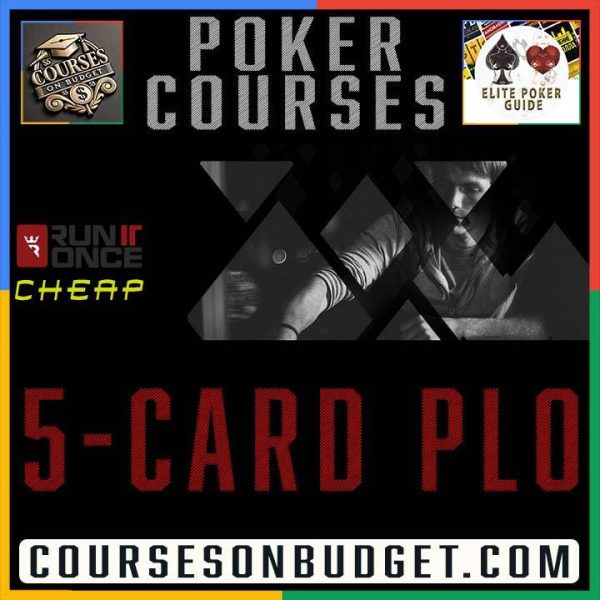 Run It Once 5-Card PLO€49.99
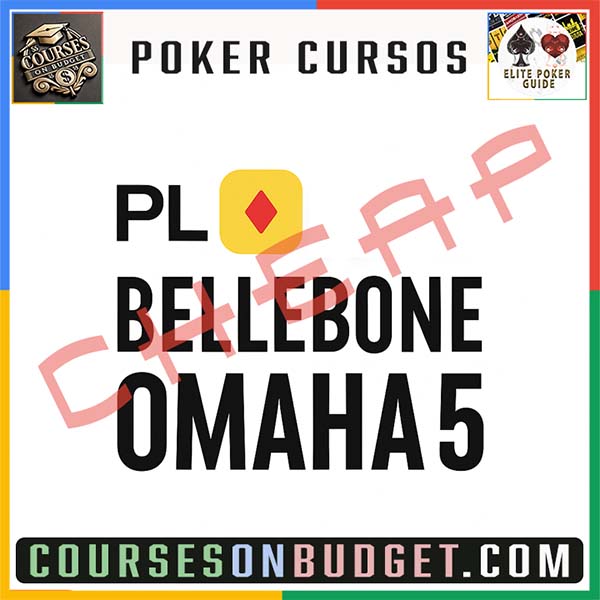 Bellebone Sistema Simples De Omaha 5 Cards
 Baruffi Omaha 4 And 5 Cards
 Best Poker Coaching Core PLO Concepts