

RED LINE POKER COURSES · NLHE CASH GAMES · UPDATED
How to Win with the Red Line: Four Red Line Poker Courses, One Study Path
Saulo Costa, Run It Once, Upswing and Robmaf all teach red line poker, and each of them means something different by it. Below you get what is actually inside every red line poker course, where they agree, where they clash, and how to combine all four into one plan for winning pots without showdown.
By the ElitePokerGuide course-index team · 4 courses · 4 quizzes · 1 video · 1 audio deep dive · 1 infographic · 14 slides
💡 TL;DR: the short answer
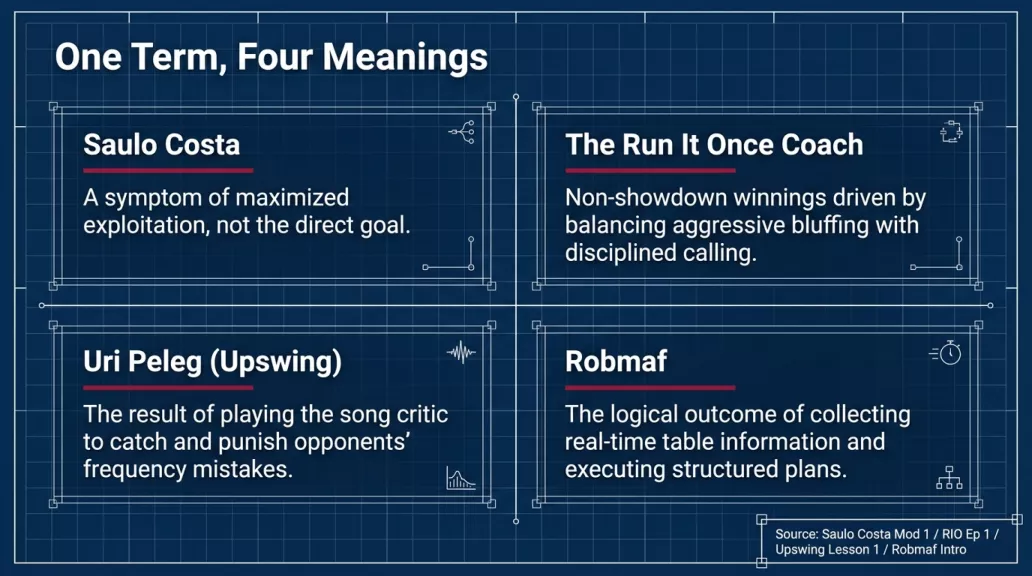
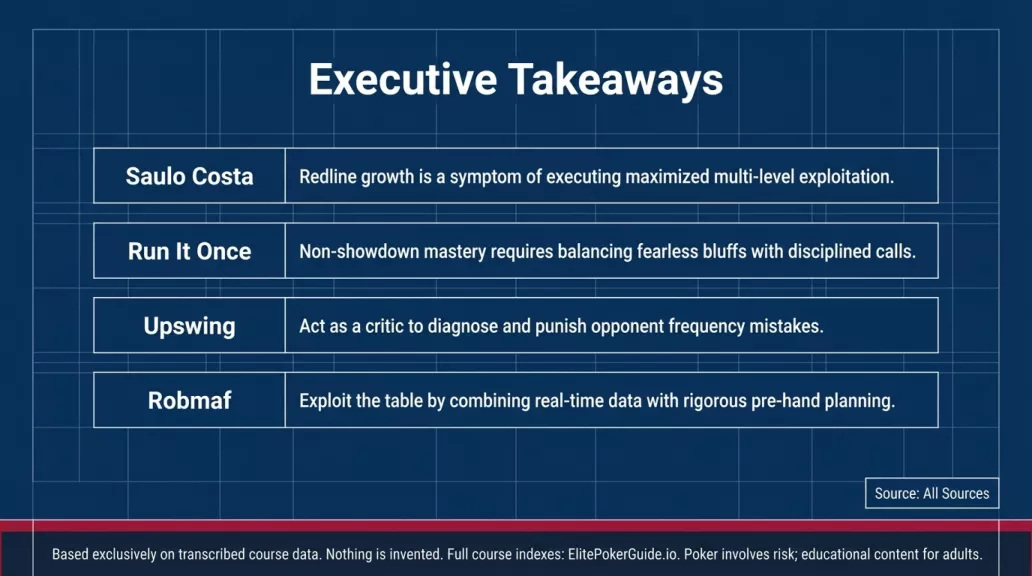
Red line poker is not one idea, it is four. For Saulo Costa the red line is a symptom, not the goal: a poor one points to leaks, and exploits lift it as a side effect. For Run It Once it is the balance of bluffing and calling. For Upswing (Uri Peleg) it is the critic’s mindset that punishes frequency mistakes. For Robmaf it is the outcome of a plan made before every hand.
No single course covers all of it. Upswing gives the why, Robmaf gives the who, Run It Once gives the where, Saulo Costa gives the how far.
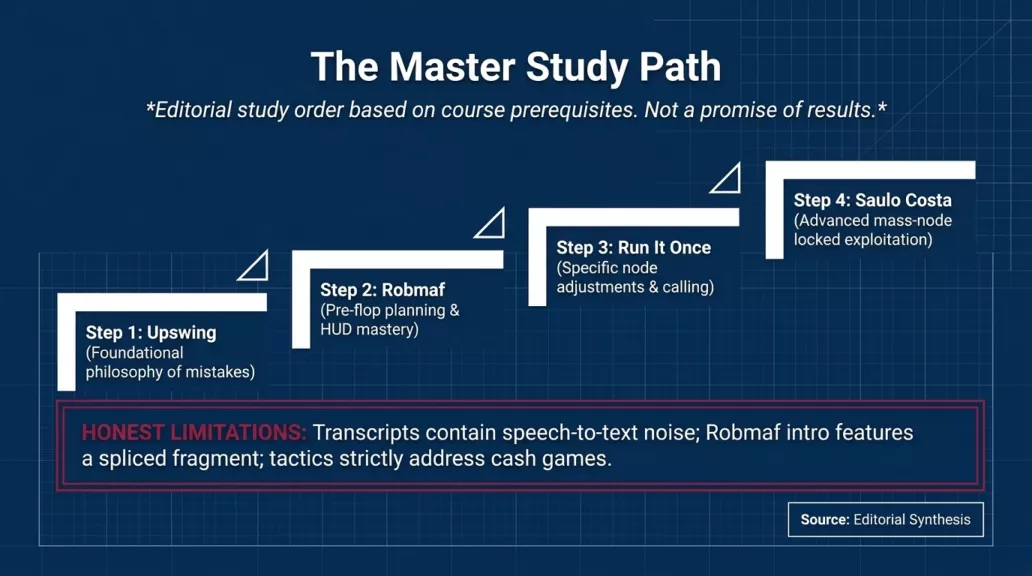
Our editorial study order: Upswing, then Robmaf, then Run It Once, then Saulo Costa. It is an order based on course prerequisites, not a promise of results.
Where this comes from: exclusively from transcribed course data. Nothing is invented.
In this guide
- What is red line poker? The red line explained
- Watch, listen, skim: red line poker in four formats
- Course 1: Saulo Costa, The Redline Blueprint
- Course 2: Run It Once, Red Line Mastery
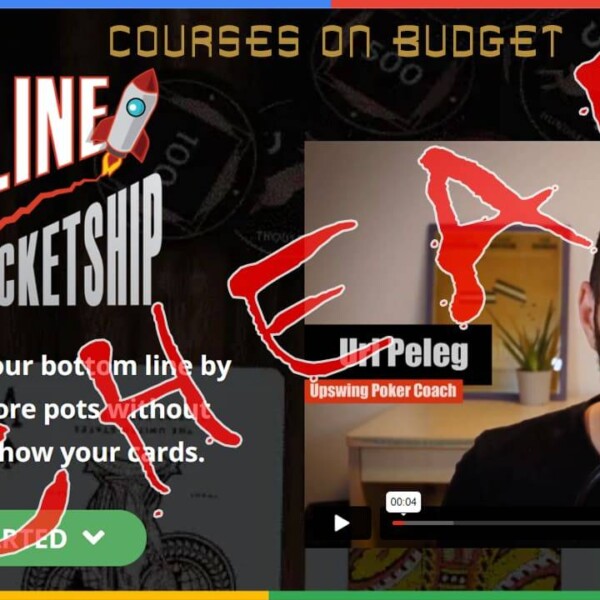
- Course 3: Upswing Red Line Rocketship
- Course 4: Robmaf, Redline Ninja Course
- The four red line poker courses compared side by side
- How to win with the red line: the four-course path
- The 14-slide briefing
- Honest limits of this comparison
- Red line poker FAQ
Read this first: how this comparison was built
This article is built exclusively from transcribed data: speech-to-text transcripts of the lessons in all four courses, the full lesson index of each course folder, and screenshots taken from the lessons. Nothing is invented. There are no win-rate promises, no earnings claims and no results from our own tables.
Speech-to-text mishears names, cards and numbers. Where a detail was garbled we left it out or marked it. The video, audio retelling, infographic and slides on this page were generated from the same transcripts. Poker involves risk, and this is educational content for adults.
What Is Red Line Poker? The Red Line Explained
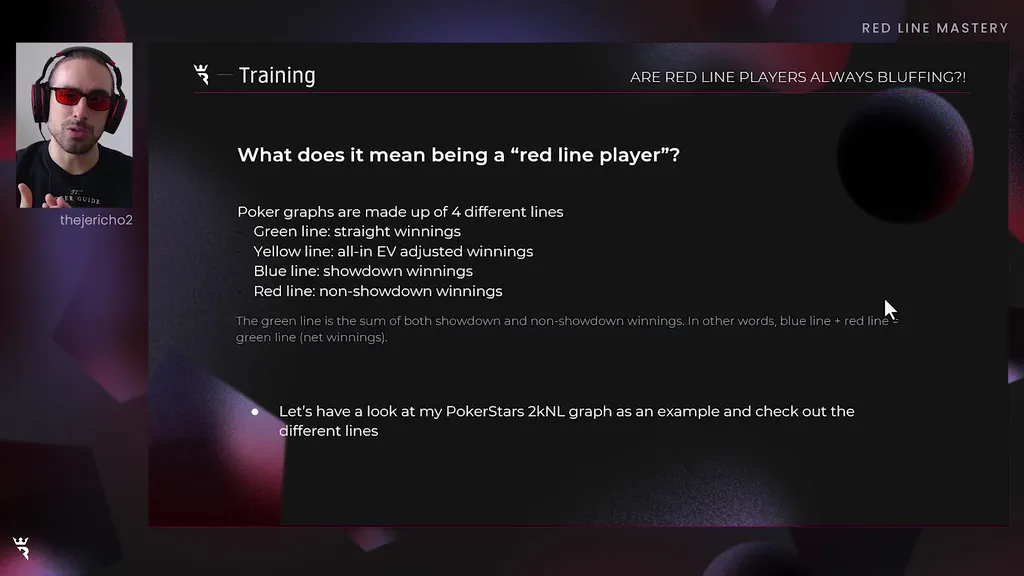
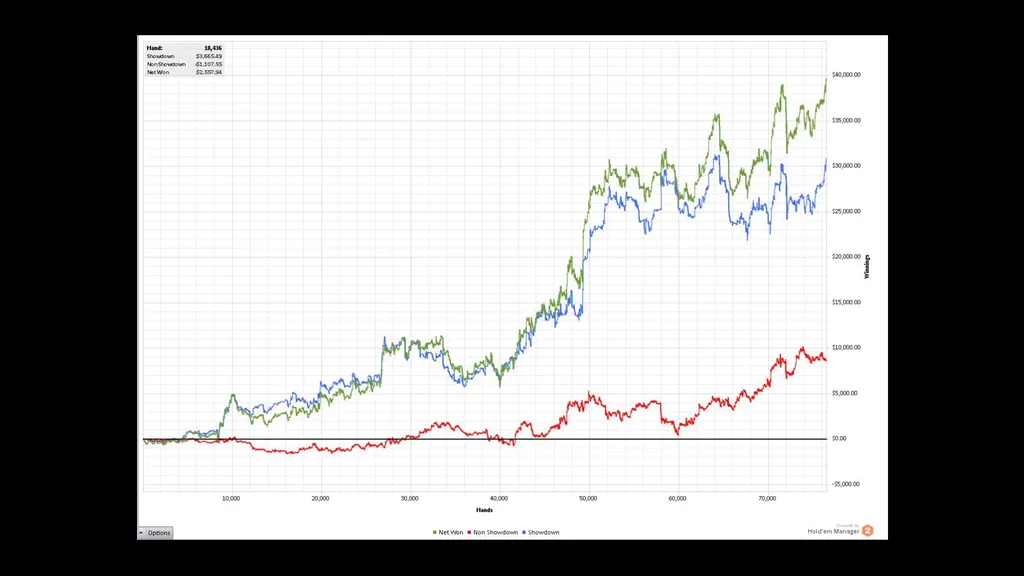
Open the winnings graph of a poker tracker and your results split into lines. The first episode of Run It Once Red Line Mastery lays them out: green is net winnings, yellow is all-in EV-adjusted winnings, blue is showdown winnings, and red is non-showdown winnings. Red is the money you win or lose without showing cards: 3-bets and 4-bets that get folds, flop bets that take the pot, turn raises and river bets. It also goes down every time you fold.
Robmaf puts it as a formula in his intro: green equals blue plus red. So a positive red line means you are collecting pots that other players give up. That is why every serious player wants to understand it, and why four different instructors built whole courses around it.
That is the premise of red line poker. The catch: the four courses do not agree on what to do about it.
One term, four meanings
| Course | What the red line means there | Where it is said |
|---|---|---|
| Saulo Costa | A symptom, not the goal. The objective is to make more money by exploiting opponents; a very poor red line signals many leaks. | Module 1, Course Objective |
| Run It Once | Non-showdown winnings, raised by bluffing AND calling. Red line poker players are not always bluffing. | Episode 1, Introduction |
| Upswing (Uri Peleg) | A mindset: make fewer fundamental mistakes than opponents and exploit their frequency mistakes, like a critic in the audience. | Red Line Philosophy |
| Robmaf | An outcome, not a goal: the result of collecting real-time information and executing a plan before every hand. | Intro and 01 Red Myths |
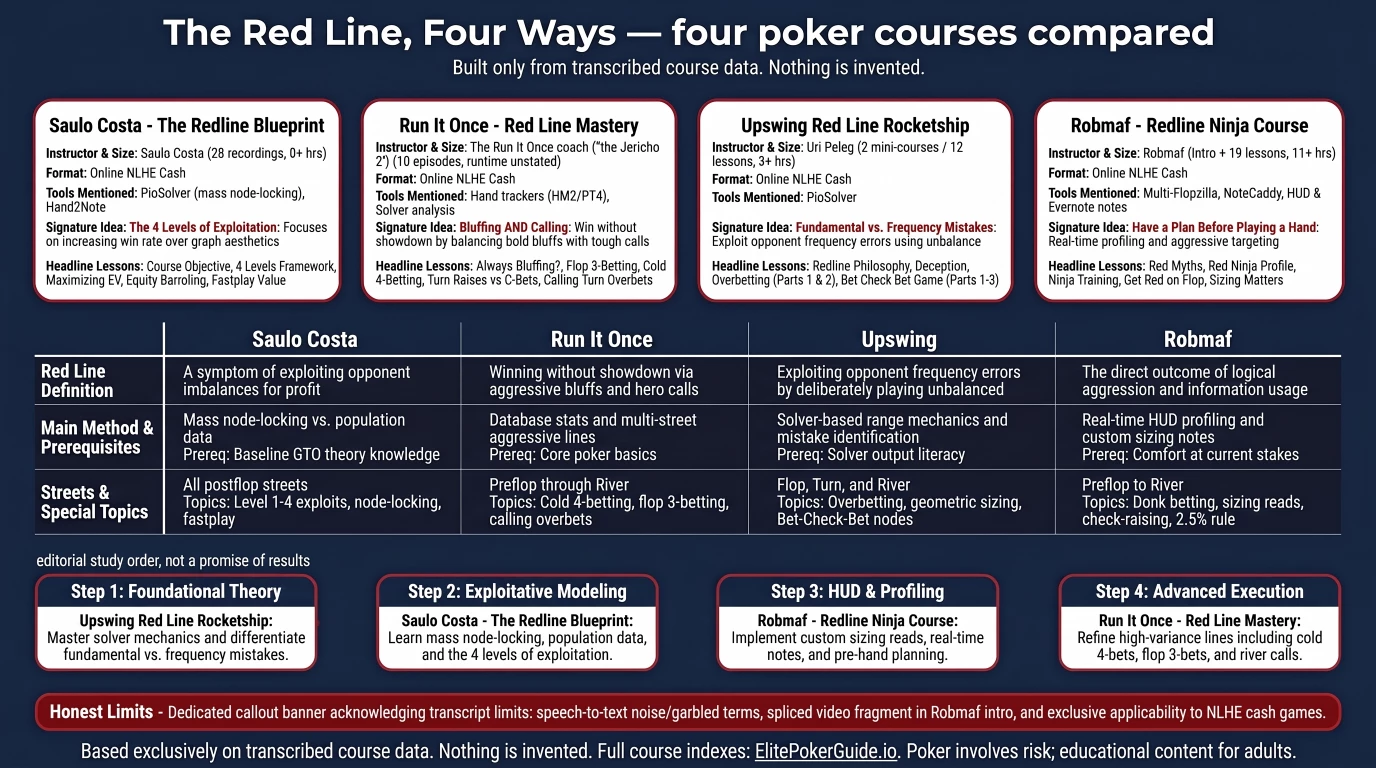
All four courses are about NLHE cash games. The transcripts we worked from contain no tournament lessons, so this is a cash-game comparison from start to finish.
Watch, Listen, Skim: Red Line Poker in Four Formats
We turned the four transcripts into a short video, a long audio retelling, an infographic and a 14-slide deck. Start with whichever format fits your day.
Watch: the 6-minute video retelling
Six minutes, four courses. Use it as the fastest overview before you read the course sections below.
Listen: the 48-minute audio deep dive
The long version, built for headphones. It follows the same four courses and puts their disagreements side by side. Both retellings were generated from the transcripts, so the same rule applies: exclusively transcribed data, nothing invented.
Course 1: Saulo Costa, The Redline Blueprint (4 Levels of Exploits)
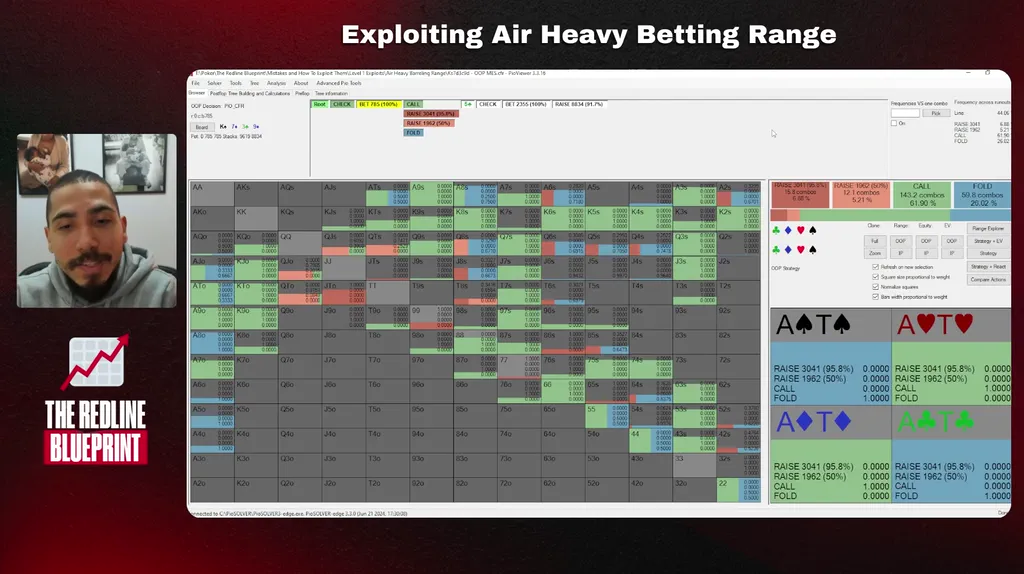
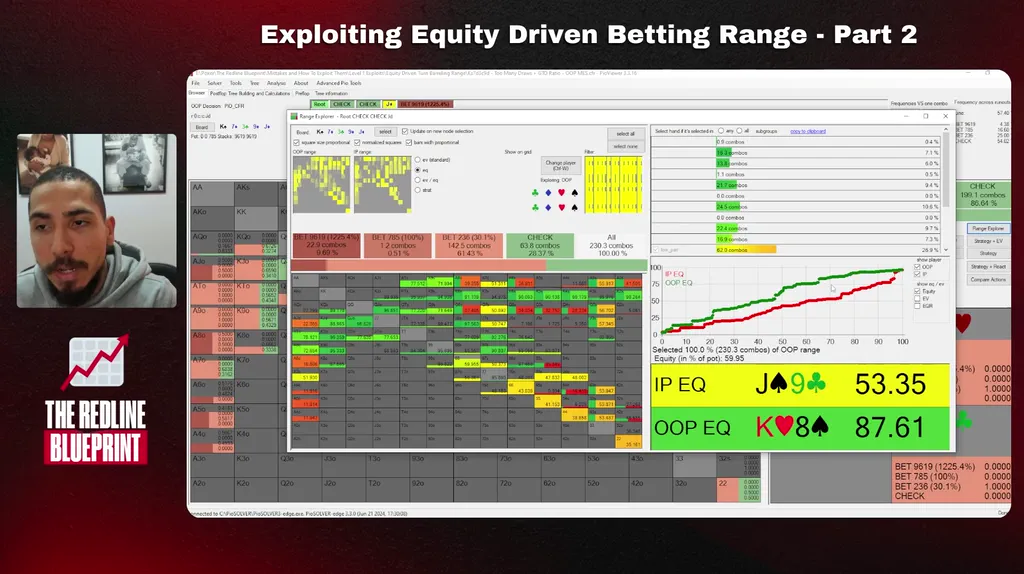
The most technical course of the four. Saulo builds opponent mistakes inside PioSOLVER, node-locks them, and shows how to punish each mistake at four different levels. If you want to know why an exploit works, this is the one.
At a glance
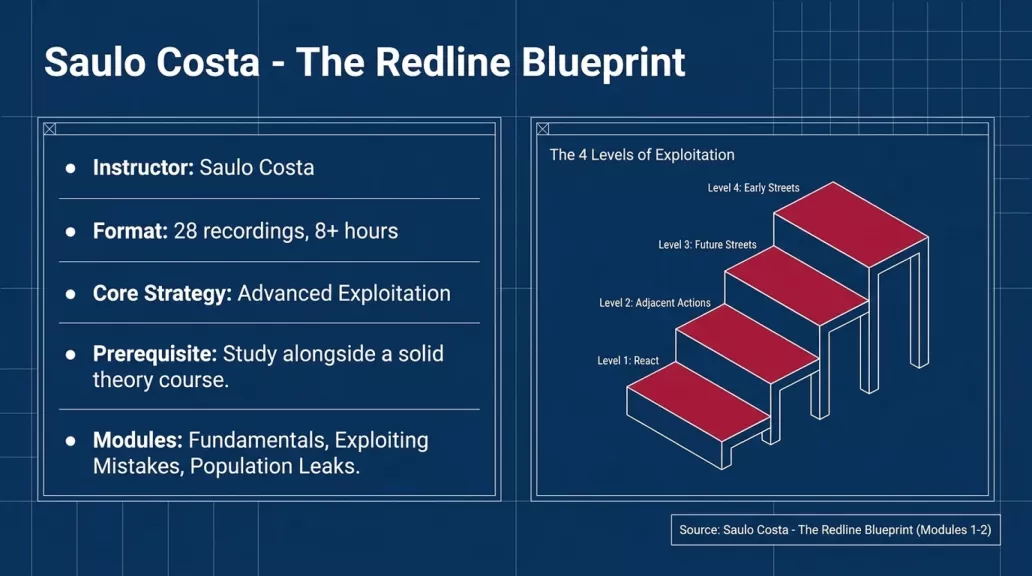
- Instructor: Saulo Costa
- Format: 28 recordings in 3 modules, about 8.4 hours by transcript timestamps
- Core method: node-locked solver models, a max-exploit version and a minimally exploitative version of most leaks
- Tools shown: PioSOLVER, plus Hand2Note for population data
- Streets and pots: flop to river in single raised, 3-bet and 4-bet pots
- Prerequisite he states: study it alongside a solid theory course (he recommends his GTO Blueprint)
What the course says red line poker is
Saulo opens by taking the pressure off the graph. The objective of the course is not to improve your red line, it is to make more money, and exploits tend to lift the red line as a side effect. A very poor red line is a symptom of leaks. His advice: do not chase the graph, chase knowledge and better exploits.
“Crush the bottom, avoid the top.” That is how he describes whom to target: weak, passive regulars, not the strongest players in your pool.
Full course index (28 lessons)
Module 1: Fundamentals (5 lessons)
- Course Objective
- Fundamentals of Exploitation
- Modeling Leaks in PioSOLVER
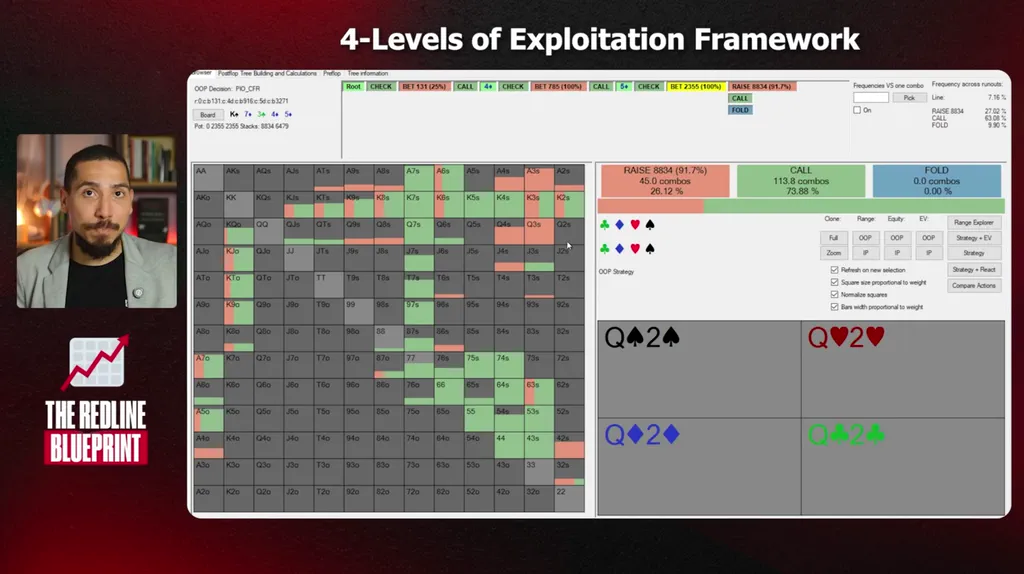
- 4-Levels of Exploitation Framework
- Tips to Make the Most out of Exploit Strats
Module 2: Exploiting Mistakes (13 lessons)
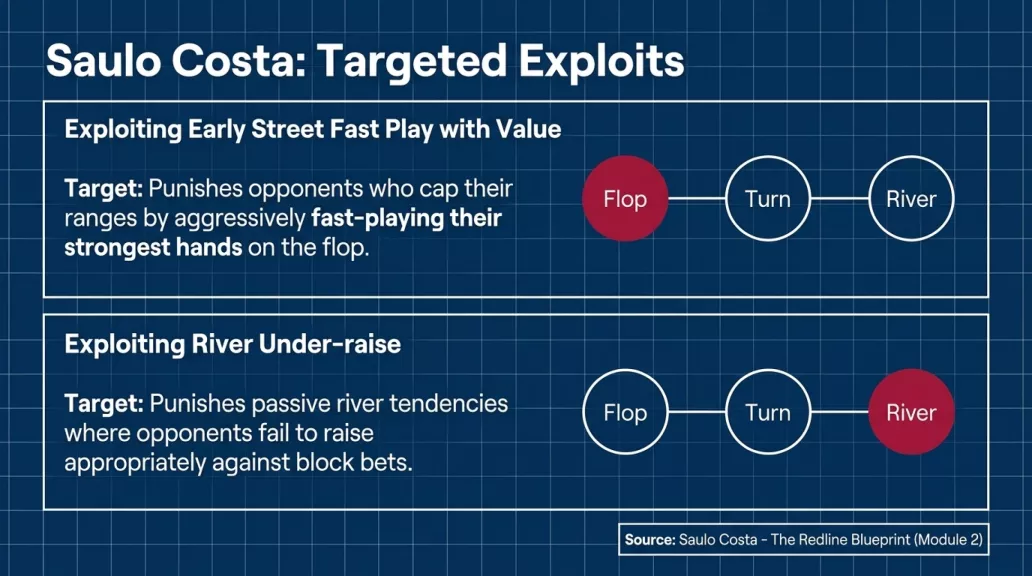
- Exploiting River Overfold
- Exploiting River Underraise
- Exploiting Low Betting Volume
- Exploiting Equity Driven Barreling Range
- Exploiting Equity Driven Barreling Range, Part II
- Exploiting Merged Betting Range
- Exploiting Air Heavy Betting Range
- Exploiting Over Check-Raises
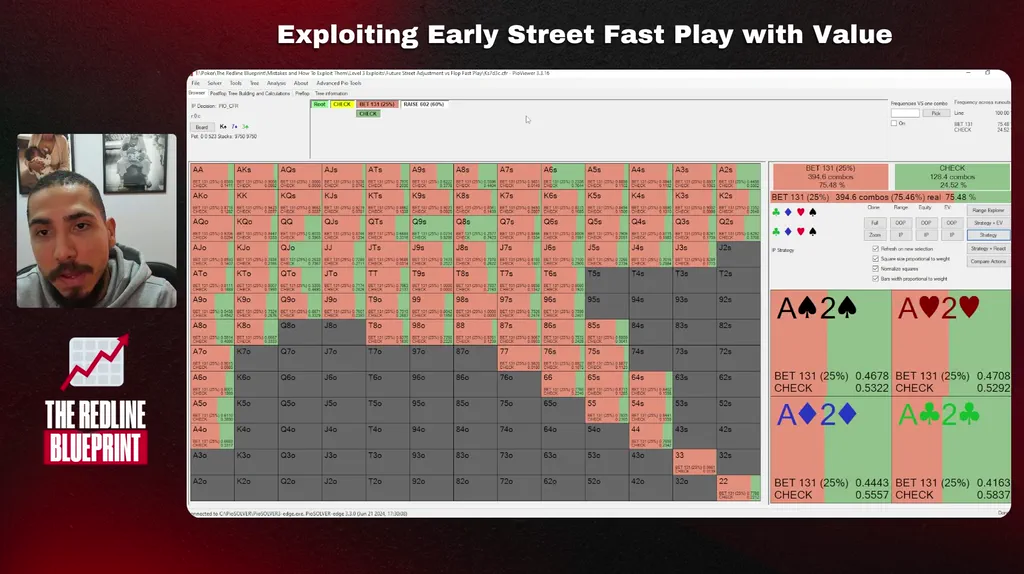
- Exploiting Early Street Fastplay with Value
- Exploiting Turn Overbarrel
- Exploiting Turn Underbarrel
- Exploiting River Overbluffs, Level 4
- Exploiting River Underbarrel, Level 4
Module 3: Population Leaks (10 lessons)
- PFR SRP IP
- PFC SRP OOP
- PFR 3BP IP
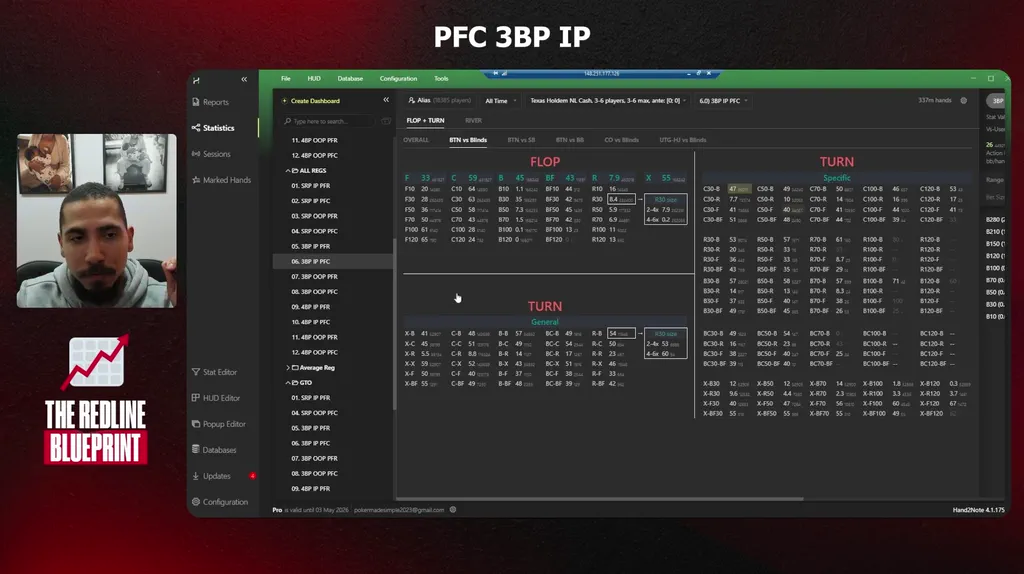
- PFC 3BP IP
- PFR 3BP OOP
- PFC 3BP OOP
- PFR 4BP IP
- PFC 4BP IP
- PFR 4BP OOP
- PFC 4BP OOP
PFR = preflop raiser, PFC = preflop caller, SRP = single raised pot, 3BP and 4BP = 3-bet and 4-bet pots, IP and OOP = in and out of position.
What you actually learn
- The difference between EV mistakes (the opponent picks a lower-EV option and pays for it alone) and frequency mistakes (only punishable if you change your own strategy). The course is built around the second kind.
- How to node-lock a leak and read two answers: the max-exploit response and the minimally exploitative response.
- The four levels: react to the mistake, attack the adjacent actions, change future streets, change early streets. Levels 3 and 4 are where he says the real money is.
- A library of leaks in Module 2, from river overfold and under-raising to turn barreling and over check-raises.
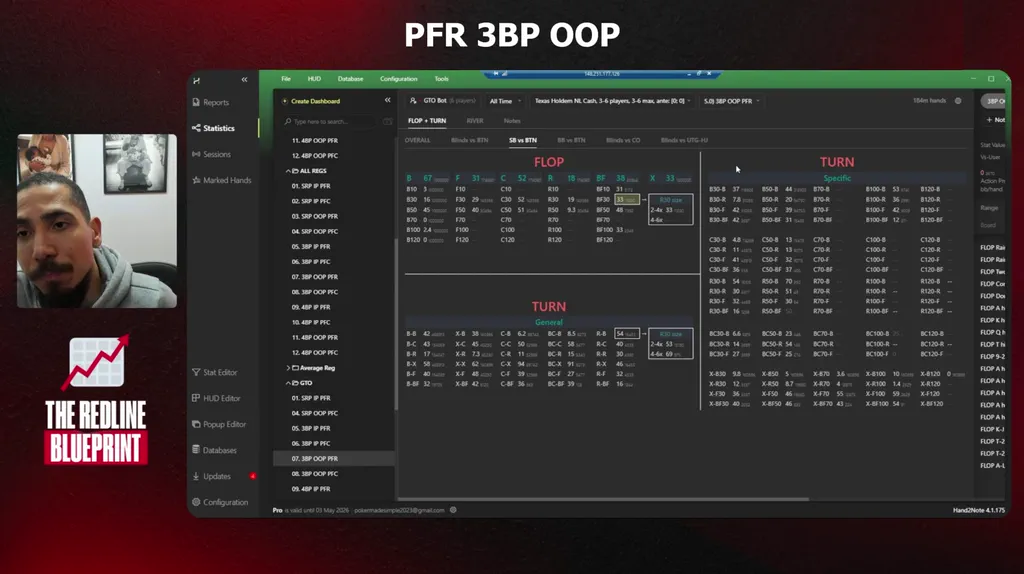
- In Module 3, population data against GTO node by node, so you can see where regulars actually deviate.
- Habits: keep a written game plan by player type, recalibrate fast when opponents adapt, and never get attached to one exploit.
Pros and cons
Pros
- Treats exploitation as a system, not a list of tricks.
- Shows how far to push: most leaks are modeled twice.
- Module 3 puts population numbers next to solver numbers across 10 nodes.
- A real 28-lesson index, 8+ hours of material.
Cons and honest limits
- Assumes you already know solvers and node-locking, and a theory baseline. He says so himself.
- Focus is on regulars, not on fish.
- Some solver sims are pruned to one bet size, which he says distorts size and raise frequencies.
- Heavy on numbers; speech-to-text garbles some of them.
Best for: players who already use PioSOLVER and want to convert leaks into lines at three different depths of thinking.
Test yourself: Saulo Costa quiz
Saulo Costa Redline Blueprint Quiz
4 questions, Easy to Brutal. Every answer names the lesson it comes from.
Get The Redline Blueprint
28 recordings, 3 modules, 4 levels of exploitation. One payment, lifetime access.
More from Saulo Costa: GTO Blueprint, LowStakes Blueprint, Dose of Red Line and the Saulo Costa Mega Bundle. Read our Redline Blueprint course index review and the comparison Blue Line vs Red Line vs Green Line.
Course 2: Run It Once, Red Line Mastery (Non-Showdown Poker)
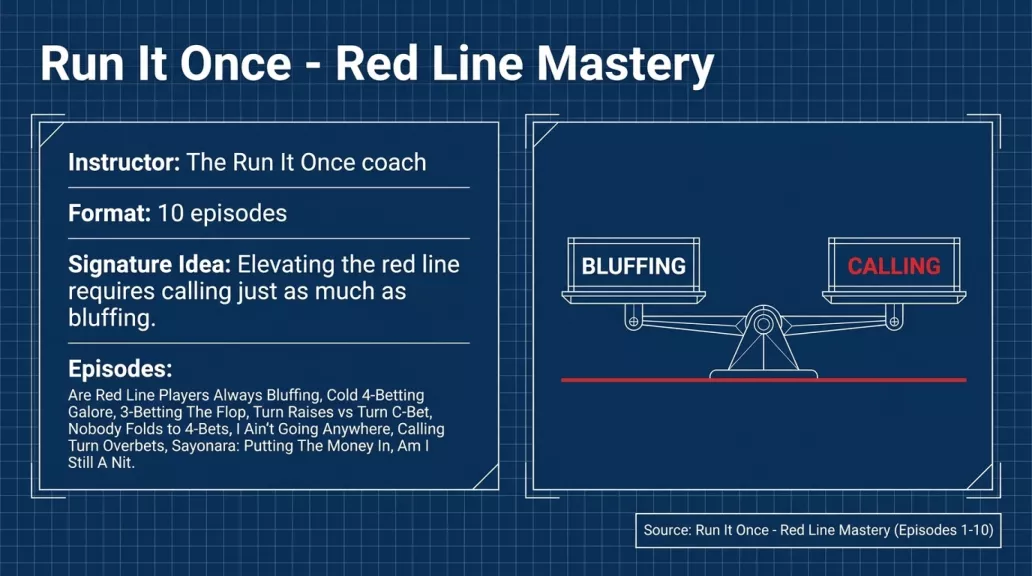
The shortest, most practical course on the shelf: ten episodes on the exact spots where red line poker players make or lose money. Its twist is that calling is treated as a red line poker weapon, not as the thing you do when you give up bluffing.
At a glance
- Instructor: a Run It Once coach. He introduces himself with a handle the transcript renders as “Jericho 2”; the real name is not confirmable from the transcript
- Format: 10 episodes in 5 folders (no runtime stated in the transcript)
- Core method: solver spot reviews, tracker stats and a weekly study routine
- Tools shown: an HM2 tracker and solvers such as PioSOLVER, GTO Wizard and Monker for reviewing hands
- Streets: preflop to river
- Brand: Run It Once
What the course says red line poker is
Episode 1 defines the four graph lines and then names three kinds of graph. The blue line graph belongs to what the coach calls 90 to 95 percent of players: lots of showdown profit, little bluffing or calling. The break-even red line graph is the bluff-heavy player. The third graph, bluffing AND calling at the right frequencies, is the one he is aiming for.
“Calling is as important as bluffing.” That sentence is the course in six words.
Full course index (10 episodes)
The five folders
- 1. Introduction: Red Line Mastery: Are Red Line Players Always Bluffing
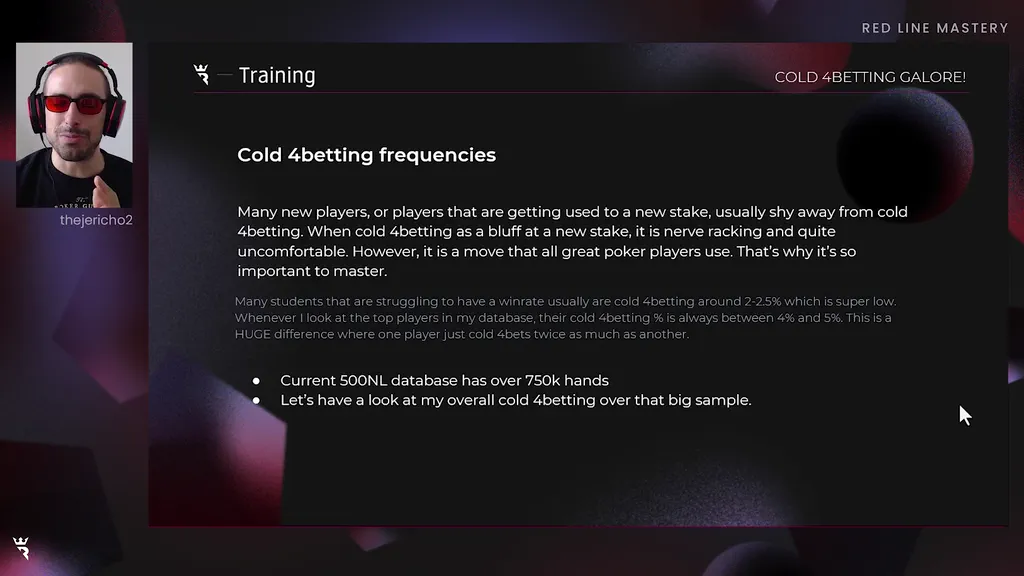
- 2. Bluffing: 3-betting The Flop In 3-bet Pots · Cold 4betting Galore · Turn Raises vs Turn Cbet In SRP
- 3. Calling: Calling Turn Overbets · I Aint Going Anywhere · Nobody Folds To 4bets Anymore
- 4. River: Close Your Eyes And Click Call · Sayonara Putting The Money In
- 5. Conclusion: Am I Still A Nit
What you actually learn
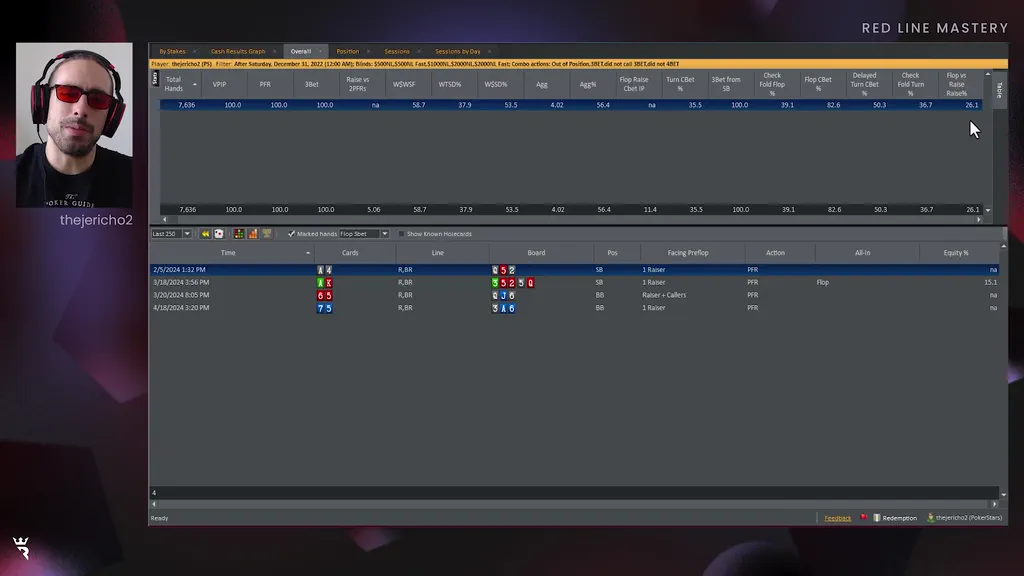
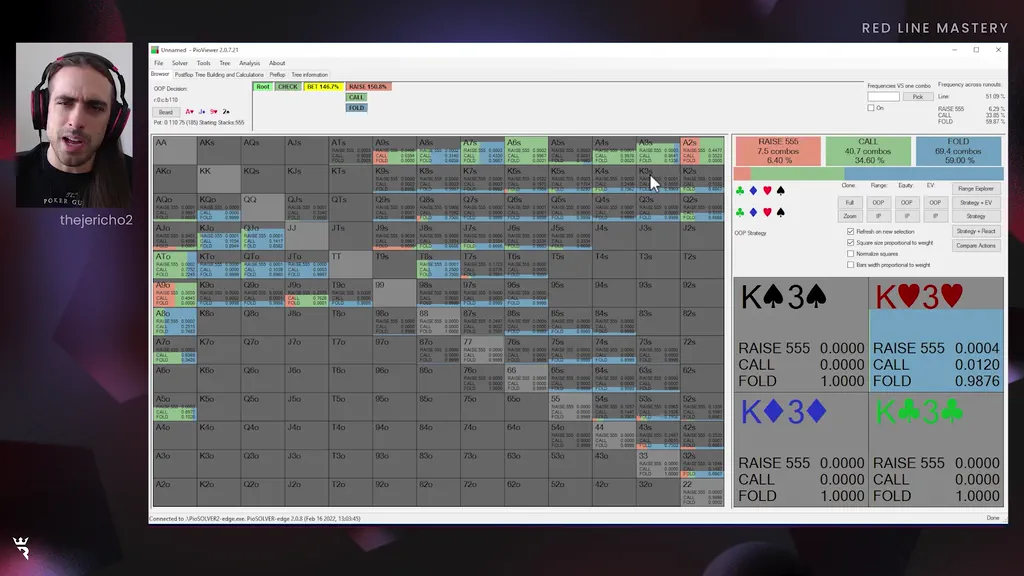
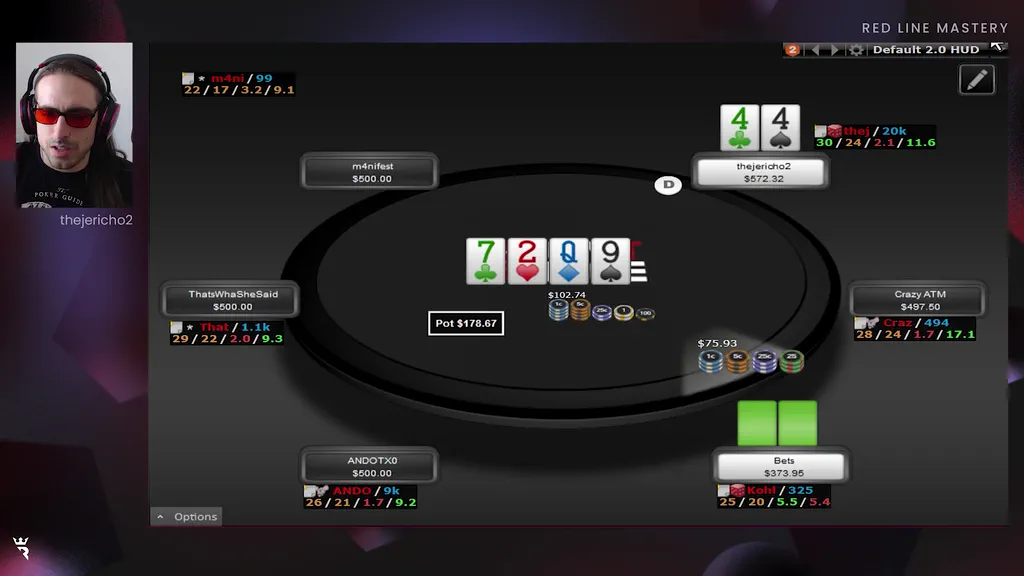
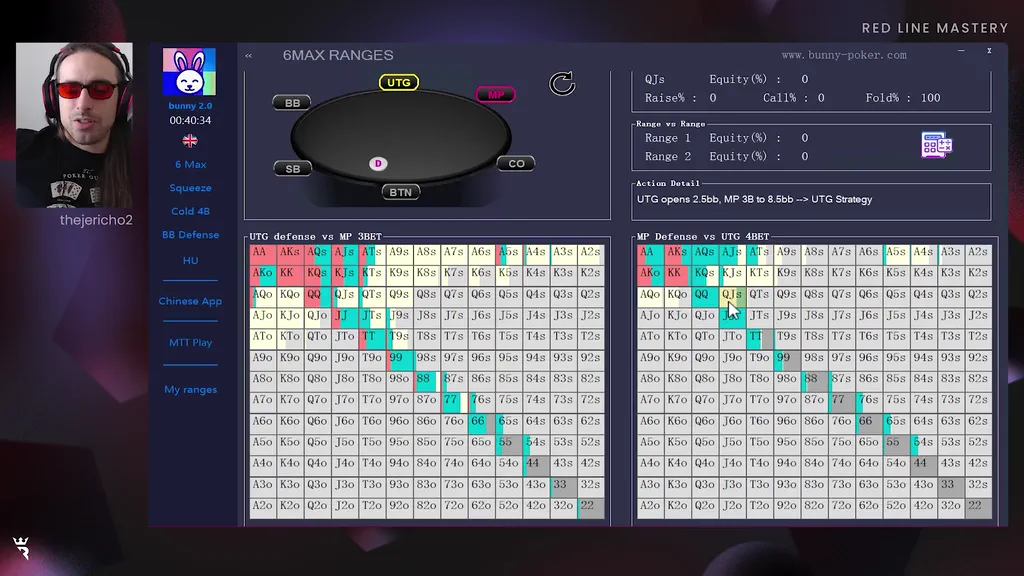
- How to use your own tracker database to compare your fold-to-4-bet, fold-to-turn-bet, cold 4-bet and flop 3-bet numbers with benchmarks the coach gives.
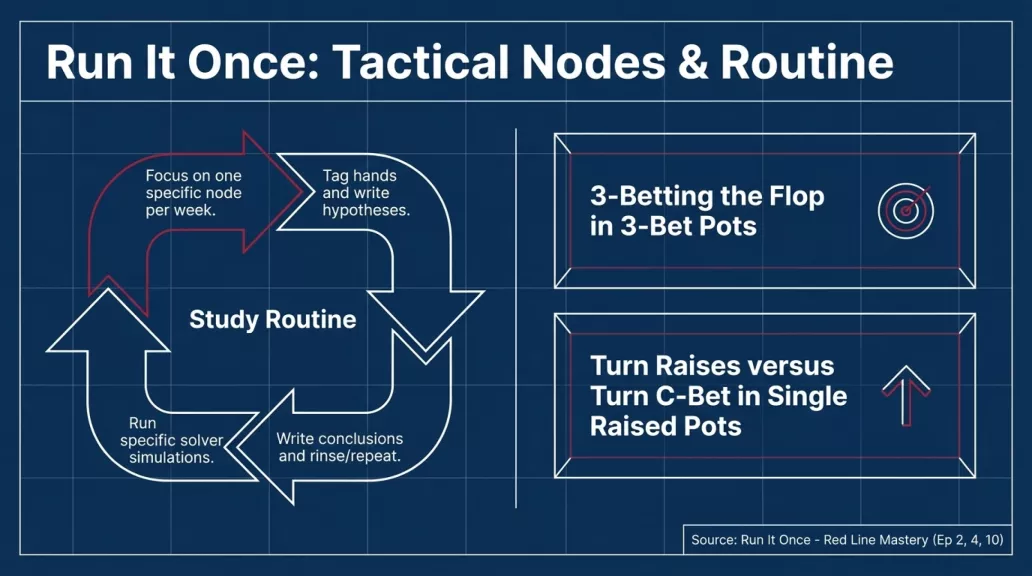
- Three bluffing nodes that students underuse: cold 4-betting, 3-betting the flop in 3-bet pots, and raising the turn against a turn c-bet.
- Three calling nodes: calling turn overbets, continuing against a flop check-raise, and what to do against 4-bets.
- On the river, how to pick bluff-catchers and bluff-jam hands by blockers, not by feel.
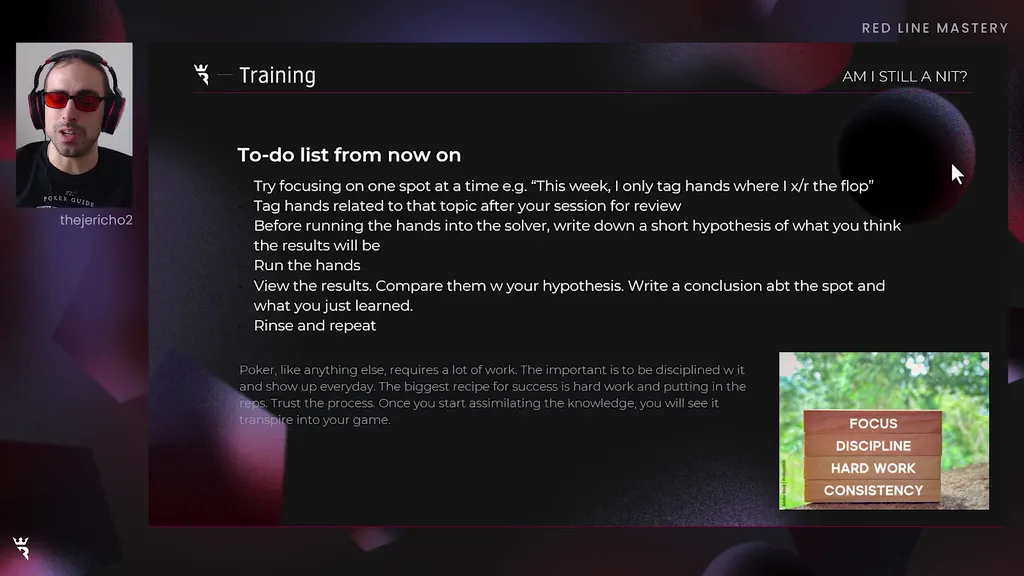
- A one-spot-a-week study routine and the list of stats to review after every session.
Pros and cons
Pros
- The only course here that treats calling as a red line poker skill.
- Compact: ten focused episodes, each on one spot.
- Benchmarks you can check against your own database.
- Ends with a repeatable routine, not just a lecture.
Cons and honest limits
- No runtime is stated in the transcript, and the instructor’s real name is not confirmable.
- Hand details in the transcript (suits, combos, board cards) are often garbled, so use the ranges as approximate.
- To use the benchmarks you need a tracker database of your own.
- Cash games only.
Best for: winning regulars who fold too much on the turn, never 4-bet bluff, and want concrete nodes to fix first.
Test yourself: Run It Once quiz
Run It Once Red Line Mastery Quiz
4 questions, Easy to Brutal. Every answer names the episode it comes from.
Get Run It Once Red Line Mastery
Ten episodes, five folders, one routine. One payment, lifetime access.
More from Run It Once: Elite Holdem 2024 and Holdem 2025. Read our Run It Once review, the Upswing vs Run It Once comparison and the Run It Once brand page.
Course 3: Upswing Red Line Rocketship (Uri Peleg)
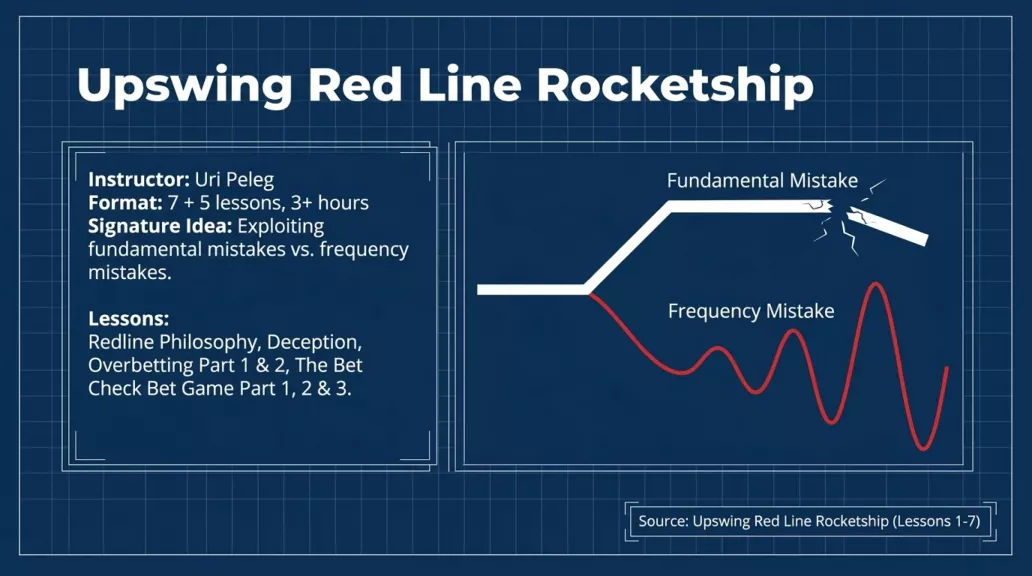
Two mini-courses in one package: a Red Line series (7 lessons) about mindset, deception, overbetting and the bet-check-bet game, and a Check-Raise series (5 lessons) about building and sizing check-raise ranges. Together they are the cleanest explanation in this comparison of why you stop trying to be balanced.
At a glance
- Instructor: Uri Peleg (he names himself in the Check-Raising Fundamentals lesson)
- Format: 12 lessons in two series, about 3.4 hours by transcript timestamps
- Core method: solver simulations, “punching bag” tests, node-locked check-raise ranges
- Tools shown: PioSOLVER (“Pio”) and its range and node-locking features
- Depth: 100 big blinds, heads-up and multiway cash
- Brand: Upswing Poker
What the course says red line poker is
Red Line Philosophy splits mistakes into two types. A fundamental mistake loses money whatever your opponents do. A frequency mistake only costs you if opponents notice and adjust. A red line poker player makes fewer fundamental mistakes than the table and exploits everyone else’s frequency mistakes. A blue line player does the first too, but spends the effort on his own balance.
“We’re never trying to play balance.” The perception shift is to stop asking how to balance and start asking in which direction you want to unbalance.
Full course index (12 lessons)
Series 1: Red Line (7 lessons)
- Red Line Philosophy
- Deception
- Overbetting Part 1
- Overbetting Part 2
- The Bet Check Bet Game Part 1
- The Bet Check Bet Game Part 2
- The Bet Check Bet Game Part 3
Series 2: Check-Raise (5 lessons)
- Check-Raising Fundamentals
- Basic Range Construction
- Positions, Sizings, and Textures
- Playing Turns and Rivers
- Lessons in Review
Listed in teaching order. In the course folder the lessons are sorted alphabetically.
What you actually learn
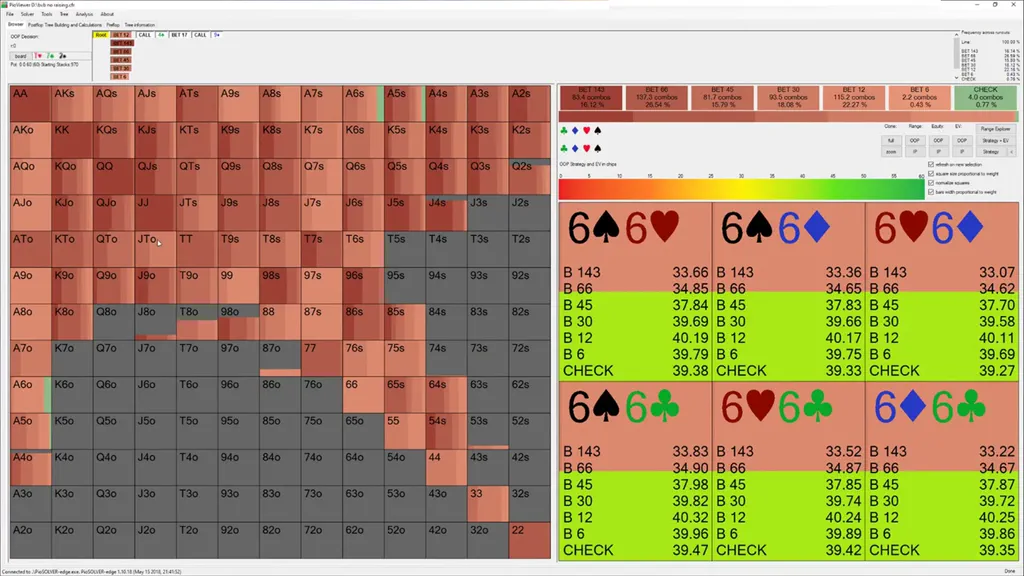
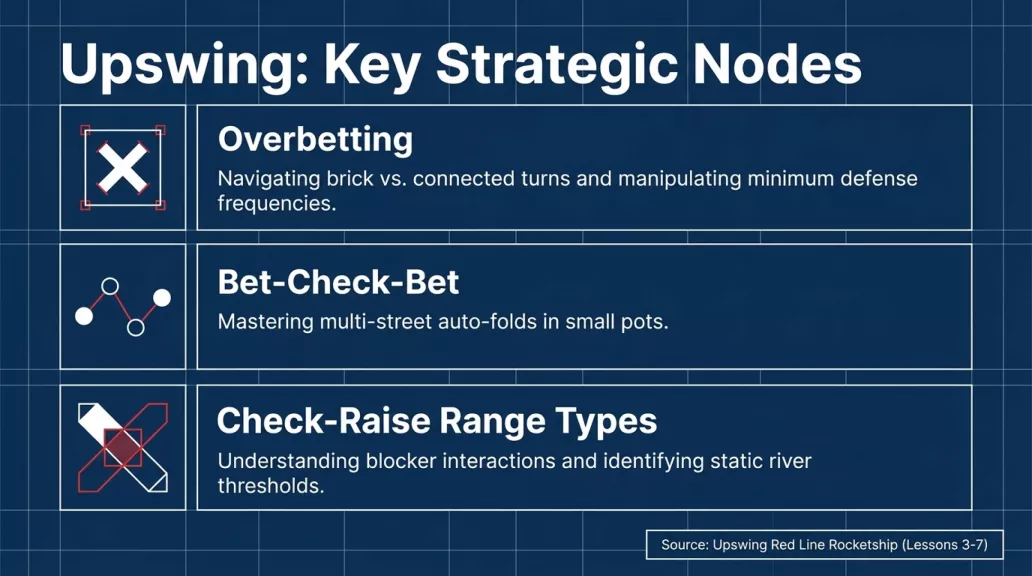
- Why not overbetting is a fundamental mistake in many spots, and why the reason to overbet is value, not extra bluffs.
- The punching bag test: remove the opponent’s ability to raise and see which size each hand actually wants.
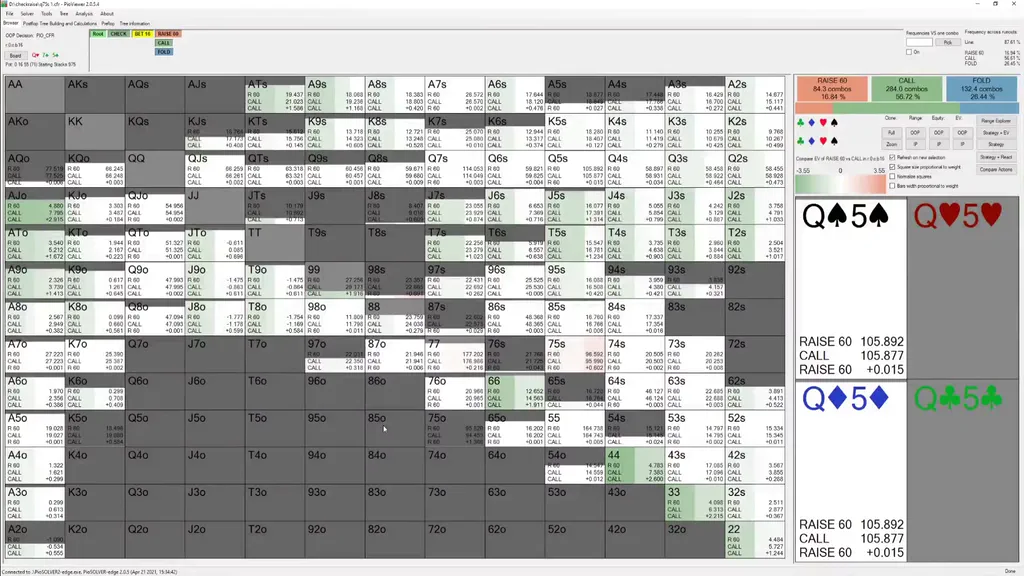
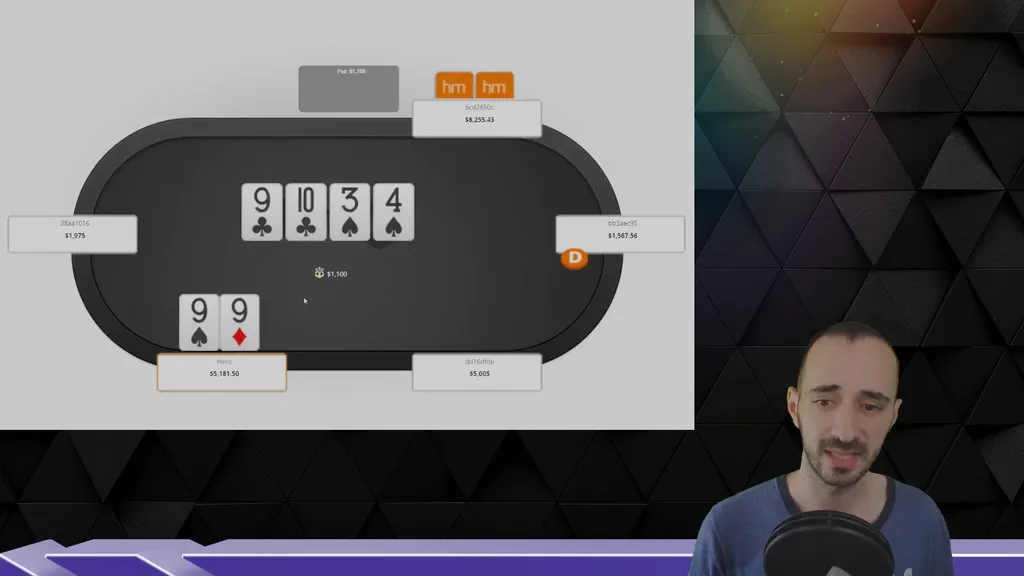
- The bet-check-bet game: five rules for the small-pot river spot where, he says, red line is created. Blockers and run-outs decide a lot.
- A check-raise range built from three bluff types, with node-lock tests for how each one gets attacked.
- Sizing and texture rules for check-raises, plus which turn cards are good or bad for your range.
Pros and cons
Pros
- The shortest path to the red line poker mindset.
- Clear, repeatable method for check-raise ranges.
- Shows where solver assumptions and real opponents differ, for example how often opponents check-raise.
- Short lessons, from about 5 to 28 minutes each.
Cons and honest limits
- Shortest of the four, about 3.4 hours.
- Assumes you know what EV means (he says so) and can read solver output.
- Built around 100 big blinds.
- The Red Line series never names its speaker aloud; the instructor link comes from Uri Peleg’s own references to “the red line course” in the Check-Raise series.
Best for: players who want the logic first: a framework for deciding where you deviate from balance, and why.
Test yourself: Upswing quiz
Upswing Red Line Rocketship Quiz
4 questions, Easy to Brutal. Every answer names the lesson it comes from.
Get Upswing Red Line Rocketship
Twelve lessons, two series, one mindset. One payment, lifetime access.
More from Uri Peleg and Upswing: Upswing Lab 2.0, Crushing Low Stakes and the Upswing Poker Mega Bundle. Read our Upswing Poker review, the Upswing courses guide and the Upswing brand page.
Course 4: Robmaf, Redline Ninja Course
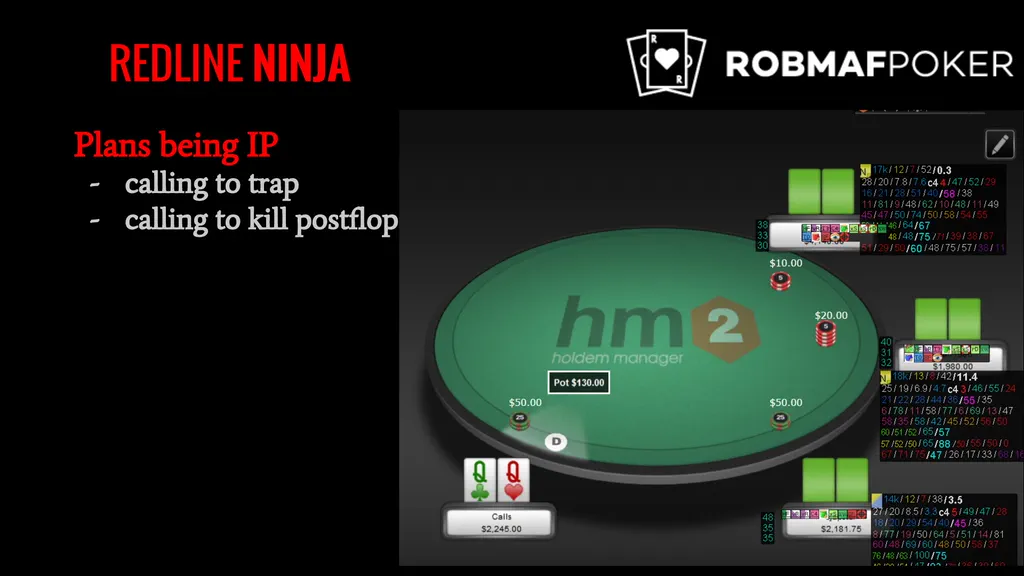
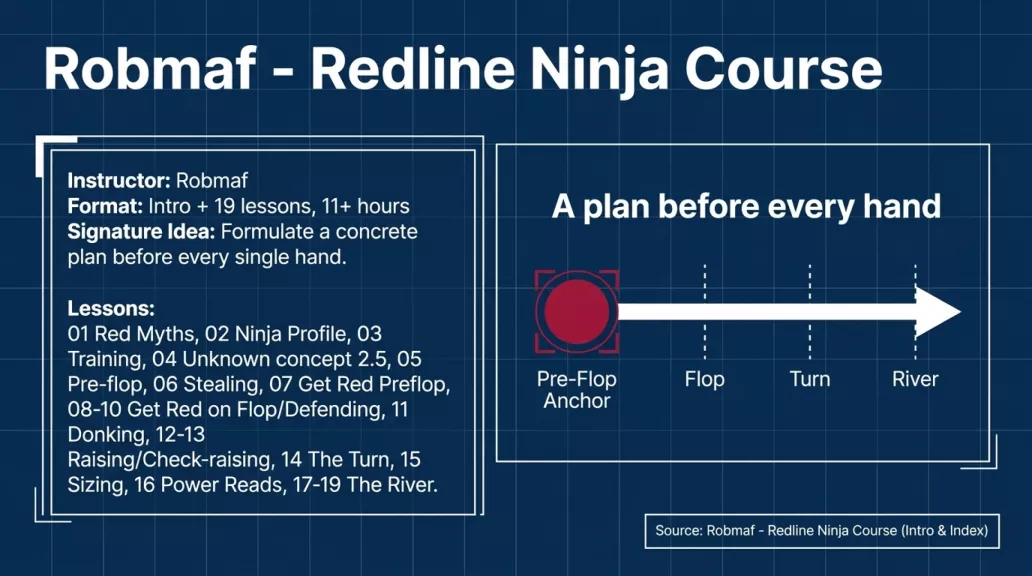
The biggest course of the four, and the only one built on opponent-specific plans. Robmaf teaches you to read stats and notes in real time, decide a plan for the hand before you act, and execute it against fish, weak regs and strong regs differently.
At a glance
- Instructor: Robmaf (the transcript spells his name many ways and he signs off as “Rob Muff Poker”)
- Format: intro plus 19 lessons, about 11 hours by transcript timestamps
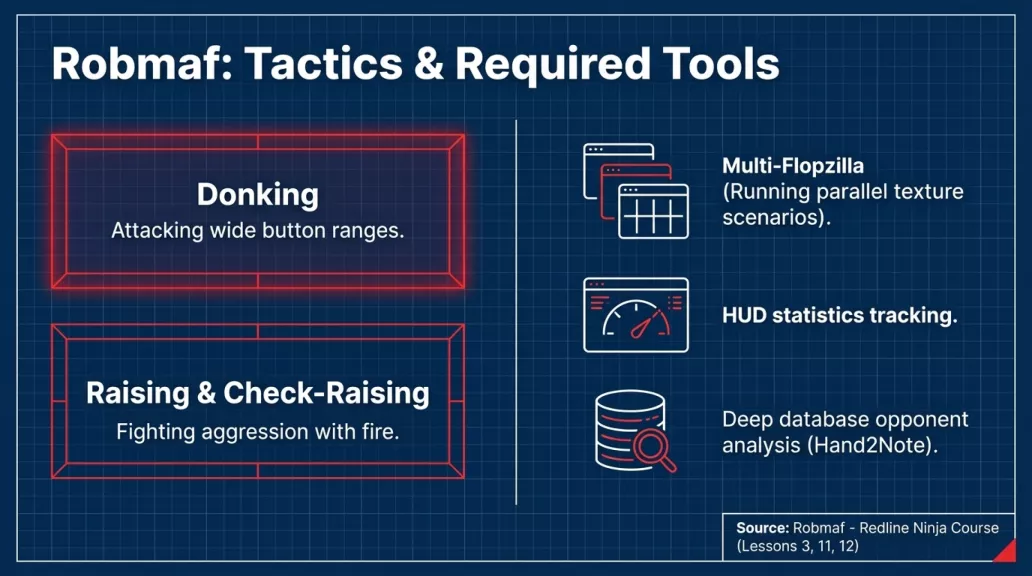
- Core method: HUD stats, notes, multiple Flopzilla windows, and a plan before every hand
- Tools shown: HM2 with NoteCaddy badges (the transcript audio is garbled here, so read as HM2 plus NoteCaddy), Flopzilla, Evernote for notes, and mentions of PioSOLVER, Poker Snowie and LeakBuster
- Streets: preflop to river, 6-max online cash, examples from NL50 to NL5K
- Earlier series he mentions: Maximum Edge
What the course says red line poker is
“Red Line is not a goal. It’s an outcome of your knowledge.” In Red Myths he argues that red does not mean aggression: shoving every hand guarantees a positive red line, but that alone is not how you earn money. The green line is what counts, and red is one way to earn it. His own graph from 300,000 hands has red as the highest line, but he also shows an opponent with a negative red line who wins decent money.
Full course index (intro plus 19 lessons)
All 20 videos
- Redline Ninja Intro
- 01 Red Myths
- 02 Red Ninja Profile
- 03 Redline Ninja Training
- 04 Unknown Concept 2.5
- 05 Preflop
- 06 Planning Hands
- 07 Get Red Preflop
- 08 Red Get on the Flop
- 09 Get Red on the Flop When Defending
- 10 Get Red on the Flop When Defending 2
- 11 Donking
- 12 Raising and Check-Raising
- 13 Defending vs Raises and Check-Raises
- 14 The Turn
- 15 Sizing
- 16 Power Reads
- 17 The River Part 1
- 18 The River OOP Part 2
- 19 The River Raise Call Fold Part 3
The first item is the intro; lesson numbers follow the file names in the course folder.
What you actually learn
- An 11-point Red Ninja profile: feel at ease at your stakes, see ranges sharply, play every type of player, plan hands, take notes live, and more.
- The 2.5% concept: a counting rule for how wide an opponent can bet the river for value.
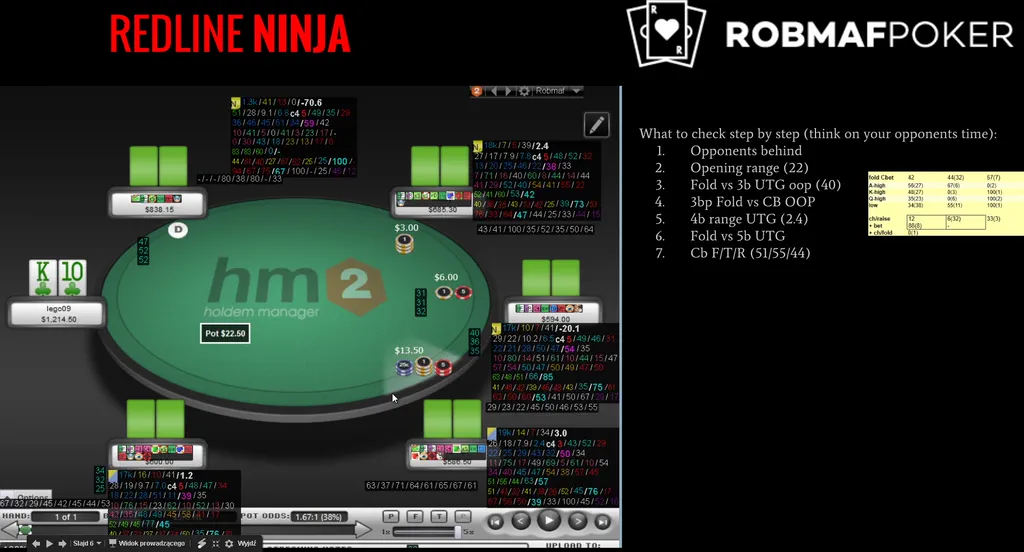
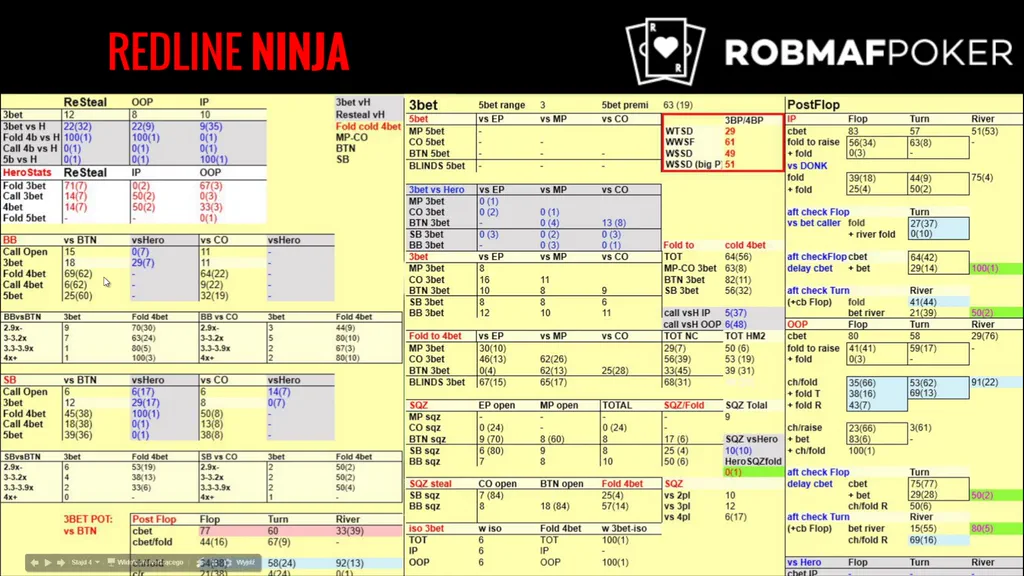
- Preflop and postflop plans from HUD stats: open, steal, 3-bet or call based on who is behind, with NoteCaddy popups.
- Special plans for fish, including isolation sizes and small multi-street bets.
- Donking, raising and check-raising as attacks, and defending against them.
- The turn (a list of 16 plans), sizing, power reads, and a three-part river series with EV formulas and a pot-size raise rule.
Pros and cons
Pros
- Largest course of the four, about 11 hours.
- Only course that builds plans against specific opponents.
- Real math for the river: EV formulas, bluff-raise break-evens, pot-size raises.
- Teaches how to collect information, not just how to use it.
Cons and honest limits
- Leans on tracker, HUD and notes software, so it pays off most with a database and tools set up.
- Examples and anecdotes reach back to the 2010s; the method is the point, the era is not.
- The intro transcript ends with a spliced fragment from another video, and some stat lines are garbled.
- Cash games only.
Best for: regs who play a fixed style against everyone and want to turn their HUD into a decision plan.
Test yourself: Robmaf quiz
Robmaf Redline Ninja Quiz
4 questions, Easy to Brutal. Every answer names the lesson it comes from.
Get Robmaf Redline Ninja Course
Intro plus 19 lessons, about 11 hours. One payment, lifetime access.
Related reading: how to use Hand2Note, best poker software tools and the EPG Poker Toolkit calculator, a free tool to pair with any plan-based course.
The Four Red Line Poker Courses Compared Side by Side
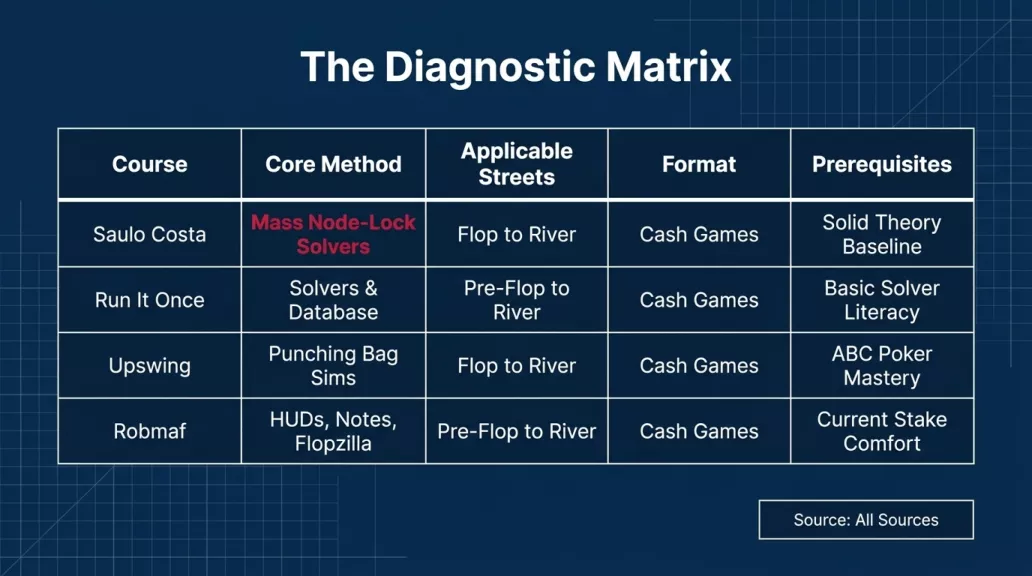
| Saulo Costa | Run It Once | Upswing (Uri Peleg) | Robmaf | |
|---|---|---|---|---|
| Size | 28 recordings, about 8.4 h | 10 episodes | 12 lessons, about 3.4 h | Intro + 19 lessons, about 11 h |
| Red line poker means | A symptom, not the goal | Non-showdown winnings, bluffs and calls | Critic’s mindset vs frequency mistakes | An outcome of planning |
| Core method | Node-locked solver models | Spot reviews and tracker benchmarks | Solver sims, punching bag, node-locked ranges | HUD stats, notes, multi-Flopzilla |
| Streets | Flop to river | Preflop to river | Flop to river | Preflop to river |
| Tools | PioSOLVER, Hand2Note | HM2 tracker, solvers | PioSOLVER | HM2 + NoteCaddy, Flopzilla |
| Signature idea | The 4 Levels of Exploitation | Bluffing AND calling | Fundamental vs frequency mistakes | A plan before every hand |
| Prerequisite | Solver literacy and a theory base (he says so) | A tracker database helps | What EV means (he says so) and solver output | Comfort at your stakes, HUD setup |
| Best for | Turning leaks into multi-street lines | Fixing named nodes fast | Learning the why | Playing the opponent, not the cards |
The “Prerequisite” row mixes what the instructors state with editorial reading. Format for all four: NLHE cash games.
Where the four courses agree
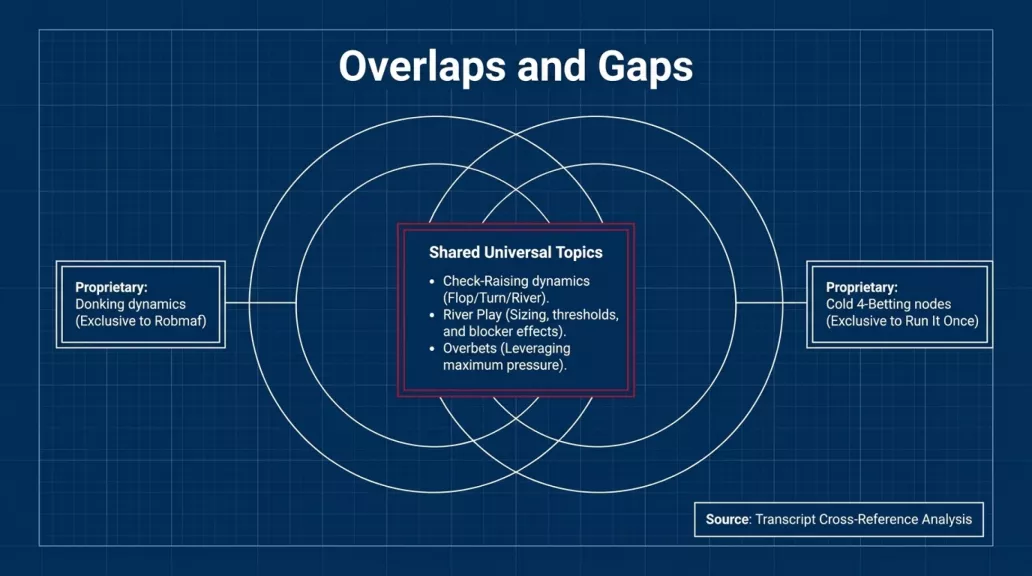
- Check-raising matters, and most players use it badly: Upswing builds the range, Robmaf teaches when to raise, Run It Once pushes the flop 3-bet, Saulo punishes over check-raises.
- River play is decided by sizing and thresholds in all four; blockers feature in Upswing, Run It Once and Saulo.
- Overbets are a weapon. Upswing explains why, Run It Once shows when to call them and jam with them, Saulo and Robmaf add the exploit and the math.
- Every course tells you to look at what the opponent does instead of what a chart says.
Where they clash
- Is red line a goal? Run It Once wants to make you a better red line poker player. Saulo and Robmaf both say it is a symptom or an outcome, not a target.
- How much to trust solvers? Saulo and Upswing live inside solvers. Robmaf says he knows no player who cannot be exploited and builds his plans on reads.
- Source of truth: Saulo uses population data against GTO, Run It Once uses the coach’s own database, Robmaf uses notes on specific opponents.
The gaps: who covers what alone
- Donking as a dedicated lesson is Robmaf’s.
- Cold 4-betting and the preflop 4-bet nodes are Run It Once’s.
- Node-by-node population data against GTO is Saulo’s Module 3.
- The fundamental vs frequency framework is Upswing’s.
Which course fits your problem
| If this is you | Start with |
|---|---|
| I do not know why I should deviate from solver play | Upswing Red Line Rocketship |
| I play the same way against everyone | Robmaf Redline Ninja Course |
| I fold too much on the turn and never 4-bet bluff | Run It Once Red Line Mastery |
| I use PioSOLVER and want to model leaks | Saulo Costa The Redline Blueprint |
How to Win with the Red Line: The Four-Course Path
Each red line poker course answers a different question. That is the reason to own all four: you can study one spot from four directions in the same week.
Step 1: Upswing answers WHY
Start with Red Line Philosophy, Deception, Overbetting and the bet-check-bet game. Learn to separate fundamental mistakes from frequency mistakes, and to decide which direction you want to unbalance. Then take the check-raise series.
Step 2: Robmaf answers WHO
Next, learn to look at the opponent before you act: stats, notes, a plan for the hand. Use the Red Ninja profile, the 2.5% concept and the preflop and flop plans to turn a database into decisions.
Step 3: Run It Once answers WHERE
Now fix named nodes: cold 4-bets, flop 3-bets in 3-bet pots, turn raises, calls against turn overbets and 4-bets, river bluff-catches and jams. End with the one-spot-a-week routine.
Step 4: Saulo Costa answers HOW FAR
Last, model leaks in a solver and choose how hard to exploit them. The four levels tell you how many streets to adjust, and Module 3 shows where the population actually deviates.
Why owning all four beats buying one
- One spot, four lessons. The river alone gets Uri Peleg’s bet-check-bet rules, Run It Once’s bluff-catch and jam episodes, Robmaf’s three-part river math and Saulo’s river leak lessons.
- Opposing views sharpen you. When one course says red line is the goal and another says it is a symptom, you have to decide why, and that is how you get better.
- No gaps. Preflop (Run It Once, Robmaf), flop (all four), turn and river (all four), population data (Saulo), opponent plans (Robmaf).
- One checkout. The four are separate products on our shelf, so you can build your own set and keep every file.
A sample four-phase routine (editorial suggestion, not a promise of results)
| Phase | Course | What you write down |
|---|---|---|
| 1 | Upswing | For every session spot: fundamental mistake or frequency mistake? |
| 2 | Robmaf | A one-line plan for each hand before you act |
| 3 | Run It Once | One spot a week: tag hands, write a hypothesis, run the solver, write a conclusion |
| 4 | Saulo Costa | A game plan by player type: min exploit, max exploit or theory, per node |
🎟 Coupon available
There is an active coupon on our coupons page. Coupons do not apply to bundle or bulk products.
Build the full red line poker set
Four courses, one study path. FOREVER LICENSE: one payment per course, lifetime access, no subscription.
📦 Delivery
Digital files. Crypto payment only. Fast delivery is handled manually after payment confirmation. Download links remain available for 7 days; save your files locally. See how to pay and how to buy cryptocurrency before you order.
Browse more in the poker shop, the full cash poker courses, or our poker courses category. Questions? FAQ or contact us. Prefer a shortlist? See best poker courses and best cash game poker courses.
The 14-Slide Briefing
Prefer to skim? Here is the whole comparison in fourteen slides: four course overviews, a diagnostic matrix, the overlaps and gaps, the study path and the takeaways.
Honest Limits of This Comparison
What you should know before you trust any of it
- Speech-to-text noise. The transcripts mishear names, cards, suits and numbers, and some lessons contain looping or garbled passages. We left out numbers we could not trust.
- Instructor names. Run It Once’s instructor is not named reliably in the transcript, and the Red Line series of Upswing Red Line Rocketship never names its speaker aloud.
- Robmaf’s intro. The intro transcript ends with a spliced fragment from a different video.
- Cash games only. None of the four courses contains tournament lessons in the transcripts we used.
- Editorial study order. The Upswing, Robmaf, Run It Once, Saulo order is our reading of the prerequisites, not an instructor’s recommendation.
- No results claims. We did not test these strategies at the tables and we promise no win rate. Poker involves risk.
Exclusively transcribed data. Nothing is invented. If you spot something that does not match your copy of a course, tell us and we will check it against the transcript.
Red Line Poker FAQ
What is red line poker?
Red line poker is built around the line on a tracker graph that shows your non-showdown winnings: money won or lost without showing cards. Green is the net result and blue is showdown winnings, and green equals blue plus red.
Is a positive red line the goal?
Not according to every course. Saulo Costa calls it a symptom and Robmaf calls it an outcome. Saulo and Robmaf say outright it is not a target. Run It Once and Upswing treat it as something you build by playing the right frequencies and exploits.
Which red line poker course should I start with?
Our editorial order is Upswing Red Line Rocketship first for the mindset, then Robmaf, then Run It Once, then Saulo Costa. If you already use PioSOLVER, you can go to Saulo earlier.
Do I need all four courses?
No. Each answers a different question, so you can start with the one that matches your problem. Owning all four lets you study the same spot from four angles.
Are these red line poker courses for tournaments?
The transcripts we used contain only cash-game material, so treat them as cash-game courses.
Do I need PioSOLVER or a HUD?
Saulo Costa and Upswing work inside PioSOLVER. Robmaf builds on an HM2 tracker with NoteCaddy and Flopzilla. Run It Once uses a tracker database and solvers such as GTO Wizard for reviewing hands.
How are the courses delivered?
Digital files. Crypto payment only. Fast delivery is handled manually after payment confirmation. Download links remain available for 7 days; save your files locally.
Is there a coupon?
Yes, there is an active coupon on the coupons page. It does not apply to bundle or bulk products.
Does a better red line guarantee winnings?
No. Poker involves risk, and none of the courses promises results. This article is educational and built exclusively from transcribed course data.
About this review
Written by the ElitePokerGuide editorial team. We index poker courses lesson by lesson so you can see what is inside before you decide. This comparison was built from the transcripts and lesson indexes of the four courses, then checked against them. Last updated .
🛡 Responsible gaming
Poker involves risk and is for adults. This is educational content, not financial advice, and it guarantees no results. Only play with money you can afford to lose. If gambling stops being fun, help is available at GambleAware.
Keep reading
- GTO vs exploitative poker: when to deviate
- How to study poker effectively
- How to use PioSOLVER in real games
- Saulo Costa poker courses in 2026
- Saulo Costa Dose of Red Line course index review
- Poker courses bundle
- Cheap poker courses
- Download poker courses
- ElitePokerGuide home
 Run It Once Red Line Mastery
 Robmaf Redline Ninja Course
 Upswing Red Line Rocketship